La crise économique mondiale : la Grande Dépression du XXIe siècle
Préface de livre
par Michel Chossudovsky et Andrew Gavin Marshall
|
||||||
Mondialisation.ca, Le 18 mai 2010
|
||||||
|
| ||||||
Le texte suivant constitue la préface du livre The Global Economic Crisis. The Great Depression of the XXI Century, de Michel Chossudovsky et Andrew Gavin Marshall (éditeurs), Montréal, Global Research, 2010, qui sera publié à la fin mai.
Dans
ce recueil bien à propos, chaque auteur lève le voile sur une trame
complexe de tromperie et de déformation médiatique servant à camoufler
les rouages du système économique mondial et ses effets ravageurs sur la
vie des gens.
Les
causes complexes tout comme que les conséquences destructrices de la
crise économique sont scrutées à la loupe dans les contributions de
Ellen Brown, Tom Burghardt, Michel Chossudovsky, Richard C. Cook, Shamus
Cooke, John Bellamy Foster, Michael Hudson, Tanya Cariina Hsu, Fred
Magdoff, Andrew Gavin Marshall, James Petras, Peter Phillips, Peter Dale
Scott, Bill Van Auken, Claudia von Werlhof et Mike Whitney.
Malgré
la diversité des points de vue et des perspectives présentées dans ce
volume, les collaborateurs arrivent tous ultimement à la même
conclusion : l’humanité se trouve à la croisée des chemins de la crise
économique et sociale la plus grave de l’histoire moderne.
PRÉFACE : La crise économique mondiale, la Grande Dépression du XXIe siècle Dans toutes les grandes régions du monde, la récession économique est profonde et entraîne le chômage de masse, l’effondrement de programmes sociaux étatiques et l’appauvrissement de millions de personnes. La crise économique s’accompagne d’un processus mondial de militarisation, d’une « guerre sans frontières » menée par les États-Unis d’Amérique et ses alliés de l’OTAN. La conduite de la « longue guerre » du Pentagone est intimement liée à la restructuration de l’économie mondiale.
Il ne
s’agit pas d’une crise économique ou d’une récession précisément
définies. L’architecture financière mondiale maintien des objectifs
stratégiques et de sécurité nationale, tandis que le programme militaire
U.S.-OTAN sert à cautionner une puissante élite d’entreprises, laquelle
éclipse et sape implacablement les fonctions du gouvernement civil.
Ce
livre conduit le lecteur dans les corridors de la Réserve Fédérale et du
Council on Foreign Relations, derrière les portes closes de la Banque
des règlements internationaux (BRI) et au cœur des salles de réunion
corporatives cossues de Wall Street, où s’effectuent couramment des
transactions financières d’une portée considérable, en un clic, à partir
de terminaux informatiques liés à de grands marchés boursiers.
Chaque
auteur lève le voile sur une toile complexe de tromperie et de
déformation médiatique servant à camoufler les rouages du système
économique mondial et ses effets ravageurs sur la vie des gens. Notre
analyse se concentre sur le rôle de puissants acteurs économiques et
politiques dans un environnement envahi par la corruption, la
manipulation financière et la fraude.
Malgré
la diversité des points de vue et des perspectives présentées dans ce
volume, les contributeurs arrivent tous ultimement à la même
conclusion : l’humanité se trouve à la croisée des chemins de la crise
économique et sociale la plus grave de l’histoire moderne.
La
débâcle des marchés financiers en 2008-2009 est née d’une fraude
institutionnalisée et de la manipulation financière. Les "sauvetages
bancaires" ont été mis en œuvre sous les instructions de Wall Street et
ont mené au plus important transfert de richesse monétaire de l’histoire
jamais enregistré, tout en créant simultanément une dette publique
insurmontable.
Avec la
détérioration planétaire des niveaux de vie et la chute des dépenses de
consommation, la structure entière du commerce international des
denrées est potentiellement compromise. Le système de paiement des
transactions monétaires est chamboulé. Une fois le marché du travail
effondré, le paiement des salaires est perturbé, ce qui en retour
déclenche une diminution des dépenses liées aux biens et services
essentiels. Cette grave dégringolade du pouvoir d’achat se répercute
ensuite sur le système de production, résultant en une série de mises à
pied, de fermeture d’usines et de faillites. Exacerbée par le gel du
crédit, la baisse de la demande de biens de consommation contribue à la
démobilisation des ressources humaines et matérielles.
Ce
processus de déclin économique est cumulatif et toutes les catégories de
main-d’œuvre sont affectées. Les paiements des salaires ne sont plus
effectués, le crédit est déréglé et les dépenses d’investissement sont
au point mort. Entre-temps, dans les pays occidentaux, le « filet de
sécurité sociale », hérité de l’État providence et protégeant les
chômeurs lors d’un ralentissement économique, est également en danger.
Le mythe de la reprise économique
Bien
que l’on reconnaisse fréquemment l’existence d’une « Grande Dépression »
de l’ordre de celle des années 1930, cela est occulté par un consensus
inflexible : « L’économie est sur la voie de la reprise. »
Alors
que l’on parle de regain économique, les commentateurs de Wall Street
ont intentionnellement négligé avec persistance le fait que la débâcle
financière n’est pas simplement composée d’une bulle, celle du marché de
l’habitation et de l’immobilier, laquelle a déjà éclaté. En réalité, la
crise est constituée de bien des bulles qui semblent toutes diminuer
l'importance de l’éclatement de la bulle immobilière de 2008.
Bien
qu’il n’y ait aucun désaccord fondamental chez les analystes du courant
dominant quant à la présence d’une reprise économique, il existe un
débat animé à savoir quand elle se produira, à savoir au cours du
prochain trimestre ou du troisième trimestre l’an prochain, etc. Déjà au
début 2010, la « reprise » de l’économie étasunienne avait été prévue
et confirmée par un torrent de désinformation médiatique soigneusement
formulé. Pendant ce temps le bourbier social du chômage accru aux
États-Unis a été scrupuleusement camouflé et les économistes voient la
faillite comme un phénomène microéconomique.
Bien
qu’ils révèlent des réalités au niveau local affectant une usine ou
plus, les reportages sur les faillites ne procurent pas de vue
d’ensemble sur ce qui se produit aux niveaux national et international.
Lorsque l’on additionne ces fermetures simultanées d’usines dans les
petites et grandes villes à travers le pays, un tableau fort différent
émerge : des secteurs entiers de l’économie nationale cessent leurs
activités.
On
continue à induire l’opinion publique en erreur quant aux causes et aux
conséquences de la crise économique, sans compter les solutions
politiques. Les gens sont amenés à penser que l’économie possède sa
propre logique, laquelle dépend de la libre influence réciproque des
forces du marché, et qu’en aucune circonstance de puissants acteurs
financiers tirant les ficelles au sein des salle de réunion
corporatives, auraient pu influencer le cours des événements
économiques.
L’appropriation
acharnée et frauduleuse de la richesse est maintenue comme partie
intégrante du « rêve américain », comme moyen de propager les bénéfices
de la croissance économique. Tel qu’exprimé par Michael Hudson, le mythe
suivant s’établit : « sans richesse au sommet, il n’y aurait pas de
retombées ». Une logique si défaillante du cycle économique masque une
compréhension des origines structurelles et historiques de la crise
économique mondiale.
Fraude financière
La
désinformation médiatique sert largement les intérêts d’une poignée de
banques mondiales et de spéculateurs institutionnels utilisant leur
mainmise sur les marchés financiers et ceux des denrées afin d’amasser
des quantités impressionnantes de richesse monétaire. Les couloirs de
l’État sont contrôlés par l’ordre corporatif établi, dont les
spéculateurs. Entre-temps, les « sauvetages bancaires », présentés au
public comme nécessaires à la reprise économique, ont facilité et
légitimé un processus additionnel d’appropriation de la richesse.
Une
quantité importante de richesse monétaire est acquise par la
manipulation financière. L’appareil financier a développé des
instruments sophistiqués de manipulation et de tromperie pures et
simples, auxquels on fait allusion sous le nom de « déréglementation ».
Grâce à des informations privilégiées et à une connaissance préalable,
de grands acteurs financiers, utilisant les instruments de transactions
spéculatives, ont la capacité de falsifier et de truquer les mouvements
des marchés à leur avantage, de précipiter l’effondrement d’un
compétiteur et de provoquer des dégâts dans les économies des pays en
développement. Ces outils de manipulation sont devenus des éléments
fondamentaux de l’architecture financière : ils sont intégrés au
système.
L’échec de la science économique dominante
La
profession d’économiste, particulièrement dans les universités, aborde
rarement le « monde réel » du fonctionnement des marchés. Des concepts
théoriques centrés sur des modèles mathématiques servent à représenter
un monde abstrait et fictif au sein duquel les individus sont égaux. Il
n’existe pas de distinction théorique entre les travailleurs, les
consommateurs ou les entreprises, auxquels ont fait invariablement
référence comme des « négociateurs individuels ». Or, aucun individu n’a
le pouvoir ou la capacité d’influencer à lui seul le marché et il ne
peut pas y avoir de conflit entre les travailleurs et les capitalistes
dans ce monde abstrait.
En
omettant d’examiner les actions réciproques des puissants acteurs
économiques dans l’économie « réelle », on ignore les techniques de
truquage des marchés, de manipulation financière et de fraude. La
concentration et la centralisation des prises de décision économiques,
le rôle des élites financières, les cercles de réflexion, les salles du
conseil : aucune de ces questions n’est examinée dans les programmes
économiques universitaires. Le concept théorique est dysfonctionnel : il
ne peut être utilisé pour assurer une compréhension de la crise
économique.
La
science économique est un concept idéologique servant à camoufler et à
justifier le nouvel ordre mondial. Un lot de postulats dogmatiques
contribue à la sauvegarde du capitalisme de libre marché en niant
l’existence d’inégalités sociales et la nature du système motivé par le
profit. Le rôle de puissants acteurs économiques et la façon dont ces
derniers sont capables d’influencer les mécanismes des marchés
financiers et de denrées n’est pas un objet de préoccupation pour les
théoriciens de la discipline. Les pouvoirs de la manipulation servant à
l’appropriation de quantités importantes de richesse monétaire sont
rarement abordés. Et lorsqu’ils sont reconnus, on considère qu’ils
appartiennent au domaine de la sociologie ou de la science politique.
Cela signifie que le cadre politique et institutionnel derrière ce système économique mondial,
modelé au cours des trente dernières années, est rarement analysé par
les économistes de l’école dominante. Il s’ensuit que l’économie, en
tant que discipline, à quelques exceptions près, n’a pas fourni
l’analyse nécessaire à la compréhension de la crise économique. En
réalité, ses principaux postulats du libre marché nient l’existence
d’une crise. L’économie néoclassique est centrée sur l’équilibre, le
déséquilibre et la « correction du marché » ou l’« ajustement » par le
mécanisme du marché, dans le but de remettre l’économie « sur la voie de
la croissance autonome ».
La pauvreté et les inégalités sociales
L’économie
politique mondiale est un système qui enrichit une poignée d’individus
au détriment de la grande majorité. La crise économique mondiale a
contribué à l’accroissement des inégalités sociales, aussi bien à
l’intérieur des pays qu’entre eux. Dans le capitalisme mondial, la
pauvreté ne résulte pas de la rareté ou du manque de ressources humaines
et matérielles. Le contraire est plutôt vrai : la dépression économique
est marquée par un procédé de désengagement des ressources humaines et
du capital physique. La vie des gens est détruite et la crise économique
est profonde.
Les
structures d’inégalités sociales ont été renforcées sciemment, menant
ainsi non seulement à un processus généralisé d’appauvrissement, mais
aussi à l’anéantissement des groupes à revenus moyen et moyen supérieur.
Le
consumérisme de la classe moyenne, sur lequel est basé ce modèle de
développement capitaliste incontrôlable, est lui aussi menacé. Les
faillites ont frappé plusieurs des secteurs les plus vivants de
l’économie consumériste. Les classes moyennes occidentales ont pour leur
part été sujettes à l’érosion de leur richesse matérielle durant
plusieurs décennies. Alors que la classe moyenne existe en théorie, il
s’agit d’une classe construite et préservée par l’endettement des
ménages.
Au lieu
de la classe moyenne, ce sont plutôt les riches qui deviennent
rapidement la classe consumériste, cela conduisant à la croissance
incessante de l’économie des marchandises de luxe. De plus, en raison du
tarissement des marchés de classe moyenne pour les produits
manufacturés, la structure de la croissance économique a subi un virage
fondamental et décisif. Avec l’effondrement de l’économie civile, le
développement de l’économie de guerre étasunienne, soutenue par un
budget de la Défense monstrueux avoisinant les billions de dollars, a
atteint de nouveaux sommets. Au moment où les marchés s’effondrent et
que la récession se développe, les entrepreneurs militaires, les
industries d’armement perfectionné, les entrepreneurs en sécurité
nationale et les compagnies de mercenaires prometteuses (entre autres)
ont connu une croissance florissante de leurs diverses activités.
La guerre et la crise économique
La
guerre est inextricablement liée à l’appauvrissement des individus, au
pays et à travers le monde. La militarisation et la crise économique
sont aussi intimement liées. La fourniture de produits et services
essentiels nécessaire aux besoins humains fondamentaux a été remplacée
par un « engin meurtrier » à but lucratif et en faveur de la « guerre
mondiale au terrorisme ». Les pauvres sont faits/utilisés pour combattre
les pauvres. Cependant, la guerre enrichit la classe supérieure,
laquelle contrôle l’industrie, l’armée, le pétrole et les banques. Dans
une économie de guerre, la mort est bonne pour les affaires, la pauvreté
est bonne pour la société et le pouvoir est bon pour la politique. Les
pays occidentaux, particulièrement les États-Unis, dépensent des
centaines de milliards de dollars par année pour assassiner des
innocents dans des pays lointains appauvris, alors que leurs citoyens
souffrent des disparités touchant à la pauvreté, aux classes, aux genres
et aux divisions raciales.
Une
« guerre économique » absolue est menée par le libre marché et entraîne
le chômage, la pauvreté et la maladie. La vie des gens est en chute
libre et leur pouvoir d’achat est détruit. Les vingt dernières années de
« libre marché » mondial ont touché d’une manière très réelle la vie de
millions de personnes, en engendrant la pauvreté et le dénuement
social.
Plutôt
que d’aborder une catastrophe sociale imminente, les gouvernements
occidentaux, qui servent les intérêts des élites économiques, ont mis en
place un État policier à la « Big Brother », ayant pour mandat la
confrontation et la répression de toutes les formes d’opposition et de
dissidence sociale.
La
crise économique et sociale est loin d’avoir atteint son paroxysme et
des pays entiers sont en danger, dont la Grèce et l’Islande. L’on a qu’à
regarder l’escalade de la guerre au Moyen-Orient et en Asie centrale
ainsi que les menace des États-Unis et de l’OTAN envers la Chine la
Russie et l’Iran pour affirmer que la guerre et l’économie sont
étroitement liées.
Notre analyse dans cet ouvrage
Les
collaborateurs de ce livre révèlent la complexité du système bancaire
mondial et de sa relation insidieuse avec le complexe
militaro-industriel et les conglomérats pétroliers. Cet ouvrage présente
une approche interdisciplinaire et polyvalente, tout en transmettant
une compréhension des dimensions historique et institutionnelle. Il
souligne également les relations complexes entre la crise économique et
la guerre, l’empire et la pauvreté mondiale. Cette crise a véritablement
une portée planétaire et des répercussions se propageant dans tous les
pays et toutes les sociétés.
La
première partie expose l’ensemble des causes de la crise économique
ainsi que les échecs des sciences économiques de l’école dominante.
Michel Chossudovsky se focalise sur l’histoire de la déréglementation
financière et de la spéculation. Tanya Cariina Hsu analyse pour sa part
le rôle de l’empire étasunien et son rapport à la crise économique. John
Bellamy Foster et Fred Magdoff offrent quant à eux un examen complet de
l’économie politique de la crise en expliquant le rôle clé de la
politique monétaire. De leur côté, James Petras et Claudia von Werlhof
présentent une revue critique détaillée du néolibéralisme en mettant
l’accent sur les répercussions économiques, politiques et sociales des
réformes du « libre marché ». Enfin, Shamus Cooke examine le rôle
central de la dette, à la fois publique et privée.
La
seconde partie, incluant des chapitres de Michel Chossudovsky et Peter
Phillips, analyse la marée montante de la pauvreté et de l’inégalité
sociale découlant de la Grande Dépression.
Grâce
aux contributions de Michel Chossudovsky, Peter Dale Scott, Michael
Hudson, Bill Van Auken, Tom Burghardt et Andrew Gavin Marshall, la
troisième partie observe la corrélation entre la crise économique, la
sécurité nationale, la guerre menée par les États-Unis et l’OTAN, et le
gouvernement mondial. Dans ce contexte, comme l’exprime Peter Dale
Scott, la crise économique engendre des conditions sociales favorisant
l’instauration de la loi martiale.
La
quatrième partie est axée sur le système monétaire international, son
évolution et la transformation de son rôle. Andrew Gavin Marshall
examine l’historique des banques centrales, ainsi que les diverses
initiatives visant à créer des systèmes monétaires régionaux et
international. Ellen Brown se concentre pour sa part sur la création
d’une banque centrale mondiale et d’une devise internationale par le
biais de la BRI. Finalement, Richard C. Cook étudie le système monétaire
basé sur la dette comme système de contrôle et offre une structure pour
la démocratisation du système monétaire.
Enfin,
la cinquième partie est centrée sur les mécanismes du système bancaire
parallèle ayant déclenché la débâcle des marchés financiers en 2008. Les
chapitres de Mike Whitney et Ellen Brown décrivent en détail comment la
combine à la Ponzi de Wall Street a été utilisée pour manipuler le
marché et transférer des milliards de dollars dans les poches des banksters.
Nous
sommes redevables aux auteurs pour leur recherche soigneusement
documentée, leur analyse incisive et, avant tout, pour leur engagement
inflexible envers la vérité : Tom Burghardt, Ellen Brown, Richard C.
Cook, Shamus Cooke, John Bellamy Foster, Michael Hudson, Tanya Cariina
Hsu, Fred Magdoff, James Petras, Peter Phillips, Peter Dale Scott, Mike
Whitney, Bill Van Auken et Claudia von Werlhof, ont livré, et ce avec
une extraordinaire clareté, une compréhension des processus économiques,
sociaux et politiques complexes qui affectent la vie de millions de
personnes dans le monde.
Nous
sommes reconnaissants envers Maja Romano de Global Research Publishers,
qui a supervisé et coordonné sans relâche l’édition et la production de
ce livre, incluant le concept créatif de la page couverture. Nous
souhaitons également remercier Andréa Joseph pour la composition
consciencieuse du manuscrit et le graphisme de la page couverture. Nous
tenons aussi à remercier Isabelle Goulet, Julie Lévesque et Drew
McKevitt pour leur soutien dans la révision et l’édition de cet ouvrage.
Michel Chossudovsky et Andrew Gavin Marshall, Montréal et Vancouver, mai 2010 Texte original en anglais : http://www.globalresearch.ca/index.php?context=va&aid=19025 Traduction : Julie Lévesque pour Mondialisation.ca. Pour de plus amples détails sur le livre (en anglais) cliquez ici. Vous pouvez commander le livre sur Mondialisation.ca 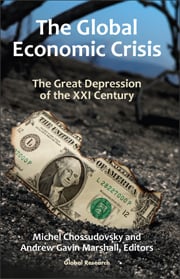 | ||||||
duminică, 18 decembrie 2011
La crise économique mondiale : la Grande Dépression du XXIe siècle Préface de livre par Michel Chossudovsky et Andrew Gavin Marshall
Vă rog să citiți acest text selectat de mine, în speranța că vă poate interesa. Cu prietenie, Dan Culcer
 Envoyer cet article à un(e) ami(e)


L’OCCIDENT EN DÉCLIN : La fuite en avant d’une 3e guerre mondiale
Vă rog să citiți acest text selectat de mine, în speranța că vă poate interesa. Cu prietenie, Dan Culcer
17 décembre 2011 par Editorial
« Je crois que les institutions bancaires sont plus dangereuses pour nos
libertés que des armées permanentes. Si le peuple américain permet aux
banques privées de contrôler l’émission de leur monnaie, d’abord par
l’inflation, puis par la déflation, les banques et les sociétés
priveront le peuple de toute propriété jusqu’à ce que leurs enfants se
réveillent sans-abri sur le continent que leurs pères avaient conquis. »
Thomas Jefferson, président des Etats-Unis d’Amérique
Après l’implosion de l’empire soviétique, ce fut comme on le sait, « la fin de l’histoire » selon le mot de Fukuyama avec une « pax americana » qui paraissait durer mille ans. Le peuple américain se voulant lui aussi, « peuple élu » comme le martèle « la destinée manifeste », c’est à lui d’éclairer le monde au besoin par le napalm. (...)Dans une conjoncture caractérisée par la rareté des matières premières, 90% des terres rares sont en Chine qui ne les vend qu’avec parcimonie. La débâcle financière des Etats-Unis et de l’Europe a amené les Etats-Unis et l’Europe à ne plus s’embarrasser de « principes », ils prennent par la force aux pays faibles leurs ressources comme c’est le cas de Kadhafi crucifié par l’Occident qui ne s’arrête pas de déstabiliser sous des dehors de démocratie qui ne trompent plus personne.
Pour le professeur Jules Dufour, l’emprise de la puissance militaire des États-Unis dans le monde est considérable et ne cesse d’augmenter. Les Étatsuniens considèrent la surface terrestre comme un terrain à conquérir, à occuper et à exploiter. La division du monde en unités de combat et de commandement illustre fort bien cette réalité. Dans ce contexte, il nous semble que l’humanité se trouve ainsi contrôlée, voire attachée à des chaînes dont les maillons constituent les bases militaires. Le processus de redéploiement des installations militaires est conduit sous la gouverne de la force, de la violence armée, de l’intervention à travers des accords de « coopération » dont les velléités de conquête sont sans cesse réaffirmées dans le design des pratiques du commerce et des échanges. Le développement économique est assuré par la militarisation ou le contrôle des gouvernements et des sociétés et des ressources immenses sont sacrifiées pour permettre ce contrôle dans la plupart des régions dotées de richesses stratégiques pour consolider les bases de l’Empire. (1)
On l’aura compris, cette mainmise sur les matières premières de plus en plus rares va susciter des tensions de plus en plus vives. Cependant, la situation n’est plus la même que celle qui prévalait après la chute de l’empire soviétique il y a vingt ans. Souvenons-nous à l’ époque, George Bush père avait annoncé un nouvel ordre. L’empire n’avait personne en face. Hubert Védrine, ministre français des Affaires étrangères, a pu parler d’hyperpuissance.
C’est dans ce cadre que l’on apprend que les Chinois ne sont pas contents du sort du Pakistan bombardé et qui a perdu 26 soldats. De plus, il voit d’un très mauvais oeil la tentative d’encerclement par le déploiement jusqu’à 2 500 marines en Australie. Selon une dépêche de l’AFP, le président chinois Hu Jintao a appelé mardi 6 décembre à la marine de se préparer pour le combat militaire, au milieu de la montée des tensions régionales sur les différends maritimes et d’une campagne américaine de s’affirmer comme une puissance du Pacifique. S’adressant à la puissante Commission militaire centrale, Hu a déclaré : « Notre travail doit étroitement encercler le thème principal de la défense nationale et la construction militaire. » L’agence de nouvelles officielle Xinhua a cité le président que de dire la marine chinoise devrait « faire des préparatifs pour la guerre prolongée ». » (2)
« Le Premier ministre chinois Wen Jiabao a averti le mois dernier contre l’ingérence des « forces extérieures » dans les différends territoriaux régionaux, y compris ceux de la mer de Chine méridionale. Alors qu’Hillary Clinton est arrivée le 30 novembre au Myanmar pour une visite de deux jours, la Chine a d’ores et déjà pris les devants. Le vice-président chinois Xi Jinping a reçu lundi à Pékin le chef des forces armées birmanes, Min Aug Hlaing, et lui a rappelé combien la Chine souhaite oeuvrer à un « partenariat stratégique » avec le Myanmar, rapporte le South China Morning Post. Le quotidien de Hong Kong précise que « l’intention du Myanmar est de montrer qu’il ne laissera pas ses relations avec la Chine se détériorer... et qu’il cherche toujours à équilibrer ses intérêts entre l’Orient et le camp occidental ». L’armée chinoise a effectué de grandes manoeuvres militaires près du Pakistan en réponse à l’installation des troupes américaines dans la région. En réponse à la montée de l’hostilité occidentale envers l’Iran, le major général Zhang Zhaozhong a remarqué que « la Chine n’hésiterait pas à protéger l’Iran même si cela doit déclencher une troisième guerre mondiale », des commentaires qui ont suscité beaucoup de débats en Chine même. (...) L’ambassadeur de la Chine à l’ONU a prévenu le directeur de l’Aiea, Yukiya Amano, de ne pas fabriquer de preuve ´´sans fondement´´ afin de justifier une attaque sur l’Iran au nom d’arrêter son programme nucléaire controversé.(2)
Du côté russe, la même inquiétude amène là aussi à une mobilisation notamment avec le déploiement du bouclier en Europe. Le général russe Nikolaï Makarov a déclaré la semaine dernière : « Je n’exclus pas des conflits armés locaux et régionaux en développement vers une guerre à grande échelle, y compris en utilisant des armes nucléaires. » Les tensions mondiales entre l’Orient et l’Occident ont explosé ces quinze derniers jours quand l’ambassadeur de Russie, Vladimir Titorenko et 2 de ses adjoints en provenance de Syrie, ont été brutalement agressés par les forces de sécurité du Qatar soutenu par la CIA et des agents du MI6 britannique. Ces derniers ont tenté d’accéder à une valise diplomatique contenant des informations des services de renseignement syriens à propos de l’invasion de la Syrie et l’Iran par les États-Unis. (...) Un journaliste américain, Greg Hunter, explique pourquoi « le monde est-il devenu hors de contrôle ? ». Il révèle que la totalité de l’économie occidentale s’effrite sous le poids de plus de 100.000 milliards de $ de dette qu’ils ne sont pas en mesure de rembourser : « Jamais dans l’histoire, le monde n’a été aussi proche d’un chaos financier total et la guerre nucléaire dans le même temps. » (3)
Enfin, un bulletin du ministère de la Défense publié par le Premier ministre Poutine déclare aujourd’hui que le président Medvedev ainsi que le président Hu ont « validé un accord de principe » sur le fait que la seule façon d’arrêter l’agression de l’Occident dirigée par les États-Unis se fera par « action militaire directe et immédiate » et que le dirigeant chinois a ordonné à ses forces navales de se « préparer à la guerre ». (4)
Claude Jacqueline Herdhuin résume bien cette tentation permanente de l’empire en écrivant que la vraie guerre est d’ordre financier : « Les États-Unis veulent rester le chien de garde du monde, peu importe si ce chien, aujourd’hui galeux et aveugle, n’est plus à la hauteur. Parfois, la sagesse et l’intelligence veulent qu’on se replie, mais l’Administration étatsunienne, sous la houlette des industries de la finance et militaire, continue de prétendre dominer la planète. Il suffit cependant d’un peu de perspicacité et de bon sens pour constater que cette puissance moribonde ne fait plus trembler le monde. » (5)
Pour Bani Sadr, ancien président iranien, l’Occident clame que le programme atomique iranien pose problème car il aurait une dimension militaire. Mais vous savez que WikiLeaks a publié des rapports secrets. Certains de ces rapports concernent ce Monsieur Yukika Amano, le Japonais qui dirige l’Aeia : selon ces rapports, ce sont les Américains qui l’ont soutenu pour devenir directeur de l’Aiea et il s’est engagé à agir dans le sens de la stratégie des Etats-Unis. (...) (...) Ce dont les responsables occidentaux ne veulent pas parler c’est que la question essentielle pour eux est de contrôler l’ensemble de la région. M.Bush avait ce projet d’amener la démocratie au Grand Moyen-Orient. Ce Grand Moyen-Orient vise en réalité à établir un contrôle par les Etats-Unis de l’Afrique du Nord jusqu’au Pakistan. (...) Ils sont intervenus en Libye, ils ont détruit un pays pour établir une démocratie, mais personne ne voit cette démocratie. Ce qu’on voit est une insécurité et une pauvreté plus grandes. Ils cherchent, en réalité, à détruire pour reconstruire, payant très cher ensuite les compagnies occidentales qui vont là-bas pour reconstruire.(...) Je ne crois pas que les Etats-Unis aient les moyens d’imposer leur hégémonie à la Chine, ou même aux pays plus petits de la région du Pacifique, ou encore, à l’Inde. Parce qu’à mon avis, les Etats-Unis ne sont plus une superpuissance, ils sont en train de devenir un pays comme un autre. » (6)
« Avec le Japon et les autres pays asiatiques, ils sont plus importants aujourd’hui que l’ensemble de l’Occident. (...) Ce qu’ils cherchent, par contre, c’est contrôler le pétrole et le gaz. Ils pensent qu’en contrôlant les deux centres que sont l’Asie centrale et le Golfe persique, ils pourront dialoguer d’égal à égal, voire établir une supériorité marginale sur l’Asie. Ce qu’ils veulent, c’est contrôler le pétrole et le gaz. Leur justification : après le départ des Etats-Unis d’Irak, l’Iran deviendrait la puissance hégémonique dans la région, en raison de la fameuse ceinture verte du chiisme [ndR] Changer le régime en Syrie, rétablir un régime sunnite signifie un Iran coupé du Liban ».(6) Concluant son interview, Bani Sadr reprend les mêmes arguments que l’ambassadeur Kishore Mahboubani : « Il y a plusieurs grandes raisons à la crise de l’Occident paniqué face à la perspective d’une perte de son hégémonie au profit des nouveaux centres de puissance asiatiques ou euro-asiatiques, tels que la Chine, l’Inde, d’abord la baisse du niveau de vie des populations. (...) Autre problème essentiel : l’Occident a abandonné le contrôle de son économie aux marchés financiers. Selon des sources, aux Etats-Unis, l’argent est beaucoup plus investi sur les marchés financiers que dans l’économie réelle sur un rapport de 1 à 7 ».(6)
Kishore Mahbubani, il décrit le déclin occidental aussi par la perte de ses propres valeurs. Pour lui, « le moment est venu de restructurer l’ordre mondial, l’Occident est dans l’incapacité à maintenir, à respecter et encore plus à renforcer les institutions qu’il a créées. Et l’amoralité avec laquelle il se comporte trop souvent sape davantage les structures et l’esprit de la gouvernance mondiale. C’est cette incapacité à exercer convenablement un leadership qui fait que l’Occident est aujourd’hui davantage le problème que la solution. « Les civilisations, disait Arnold Toynbee, ne sont pas assassinées, elles se suicident. » L’empire américain subit-il le même déclin que son prédécesseur britannique ?. (...) Les Etats-Unis comprendront-ils cette leçon ? Ou chercheront-ils à maintenir une domination globale par la seule puissance politique et militaire, engendrant ainsi toujours plus de désordre, de conflits et de barbarie ? » A terme, on s’apercevra que les slogans creux des droits qui sont ceux exclusifs de l’homme blanc en Occident - encore qu’il faille noter que même dans ces sociétés la fracture est totale entre les nantis et les pauvres - vont s’effriter au fur et à mesure de la disparition de la puissance matérielle. « A Beastly Century », « un siècle bestial » est le terme, utilisé par Margaret Drabble, pour décrire le XXe siècle ». (7)
Si la guerre éclate, le premier mouvement de l’Iran serait de fermer le détroit d’Ormuz. 40% de pétrole du monde y transite. Entre la guerre et les sanctions, les prix du pétrole monteront en flèche peut-être à 300 $ et pousseront dans l’abîme une économie occidentale au bord du gouffre. La guerre nucléaire ne sera plus une vue de l’esprit. Elle devient une option sérieuse. On prête à Einstein cette boutade : « Je ne sais pas ce qui se passera après la troisième guerre mondiale, mais je suis sûr que la quatrième guerre se fera avec des pierres, des arcs et des flèches. » Nous sommes avertis.
Professeur Chems Eddine Chitour
Ecole Polytechnique enp-edu.dz
Thomas Jefferson, président des Etats-Unis d’Amérique
Après l’implosion de l’empire soviétique, ce fut comme on le sait, « la fin de l’histoire » selon le mot de Fukuyama avec une « pax americana » qui paraissait durer mille ans. Le peuple américain se voulant lui aussi, « peuple élu » comme le martèle « la destinée manifeste », c’est à lui d’éclairer le monde au besoin par le napalm. (...)Dans une conjoncture caractérisée par la rareté des matières premières, 90% des terres rares sont en Chine qui ne les vend qu’avec parcimonie. La débâcle financière des Etats-Unis et de l’Europe a amené les Etats-Unis et l’Europe à ne plus s’embarrasser de « principes », ils prennent par la force aux pays faibles leurs ressources comme c’est le cas de Kadhafi crucifié par l’Occident qui ne s’arrête pas de déstabiliser sous des dehors de démocratie qui ne trompent plus personne.
Pourquoi le maillage mondial de la planète ?
On sait que la marine américaine sillonne les mers et accoste de temps à autre pour montrer sa puissance comme au bon vieux temps de la guerre froide et tissant un réseau de plus en plus dense de bases américaines en dehors du territoire des Etats-Unis. En effet, la plupart des sources de renseignements sur cette question (notamment C. Johnson, le Comité de surveillance de l’Otan, l’International Network for the Abolition of Foreign Military Bases, etc.) révèlent que les Étatsuniens possèdent ou occupent entre 700 et 800 bases militaires dans le monde. Un document de 2002 permet de constater la présence de militaires étatsuniens dans 156 pays, de leur présence sur des bases étatsuniennes dans 63 pays, des bases récemment construites (depuis le 11 septembre 2001) dans sept pays et un total de 255.065 effectifs militaires. Selon Gelman, en se basant sur les données officielles du Pentagone de 2005, les USA possèderaient 737 bases à l’étranger. (1)Pour le professeur Jules Dufour, l’emprise de la puissance militaire des États-Unis dans le monde est considérable et ne cesse d’augmenter. Les Étatsuniens considèrent la surface terrestre comme un terrain à conquérir, à occuper et à exploiter. La division du monde en unités de combat et de commandement illustre fort bien cette réalité. Dans ce contexte, il nous semble que l’humanité se trouve ainsi contrôlée, voire attachée à des chaînes dont les maillons constituent les bases militaires. Le processus de redéploiement des installations militaires est conduit sous la gouverne de la force, de la violence armée, de l’intervention à travers des accords de « coopération » dont les velléités de conquête sont sans cesse réaffirmées dans le design des pratiques du commerce et des échanges. Le développement économique est assuré par la militarisation ou le contrôle des gouvernements et des sociétés et des ressources immenses sont sacrifiées pour permettre ce contrôle dans la plupart des régions dotées de richesses stratégiques pour consolider les bases de l’Empire. (1)
On l’aura compris, cette mainmise sur les matières premières de plus en plus rares va susciter des tensions de plus en plus vives. Cependant, la situation n’est plus la même que celle qui prévalait après la chute de l’empire soviétique il y a vingt ans. Souvenons-nous à l’ époque, George Bush père avait annoncé un nouvel ordre. L’empire n’avait personne en face. Hubert Védrine, ministre français des Affaires étrangères, a pu parler d’hyperpuissance.
C’est dans ce cadre que l’on apprend que les Chinois ne sont pas contents du sort du Pakistan bombardé et qui a perdu 26 soldats. De plus, il voit d’un très mauvais oeil la tentative d’encerclement par le déploiement jusqu’à 2 500 marines en Australie. Selon une dépêche de l’AFP, le président chinois Hu Jintao a appelé mardi 6 décembre à la marine de se préparer pour le combat militaire, au milieu de la montée des tensions régionales sur les différends maritimes et d’une campagne américaine de s’affirmer comme une puissance du Pacifique. S’adressant à la puissante Commission militaire centrale, Hu a déclaré : « Notre travail doit étroitement encercler le thème principal de la défense nationale et la construction militaire. » L’agence de nouvelles officielle Xinhua a cité le président que de dire la marine chinoise devrait « faire des préparatifs pour la guerre prolongée ». » (2)
« Le Premier ministre chinois Wen Jiabao a averti le mois dernier contre l’ingérence des « forces extérieures » dans les différends territoriaux régionaux, y compris ceux de la mer de Chine méridionale. Alors qu’Hillary Clinton est arrivée le 30 novembre au Myanmar pour une visite de deux jours, la Chine a d’ores et déjà pris les devants. Le vice-président chinois Xi Jinping a reçu lundi à Pékin le chef des forces armées birmanes, Min Aug Hlaing, et lui a rappelé combien la Chine souhaite oeuvrer à un « partenariat stratégique » avec le Myanmar, rapporte le South China Morning Post. Le quotidien de Hong Kong précise que « l’intention du Myanmar est de montrer qu’il ne laissera pas ses relations avec la Chine se détériorer... et qu’il cherche toujours à équilibrer ses intérêts entre l’Orient et le camp occidental ». L’armée chinoise a effectué de grandes manoeuvres militaires près du Pakistan en réponse à l’installation des troupes américaines dans la région. En réponse à la montée de l’hostilité occidentale envers l’Iran, le major général Zhang Zhaozhong a remarqué que « la Chine n’hésiterait pas à protéger l’Iran même si cela doit déclencher une troisième guerre mondiale », des commentaires qui ont suscité beaucoup de débats en Chine même. (...) L’ambassadeur de la Chine à l’ONU a prévenu le directeur de l’Aiea, Yukiya Amano, de ne pas fabriquer de preuve ´´sans fondement´´ afin de justifier une attaque sur l’Iran au nom d’arrêter son programme nucléaire controversé.(2)
Du côté russe, la même inquiétude amène là aussi à une mobilisation notamment avec le déploiement du bouclier en Europe. Le général russe Nikolaï Makarov a déclaré la semaine dernière : « Je n’exclus pas des conflits armés locaux et régionaux en développement vers une guerre à grande échelle, y compris en utilisant des armes nucléaires. » Les tensions mondiales entre l’Orient et l’Occident ont explosé ces quinze derniers jours quand l’ambassadeur de Russie, Vladimir Titorenko et 2 de ses adjoints en provenance de Syrie, ont été brutalement agressés par les forces de sécurité du Qatar soutenu par la CIA et des agents du MI6 britannique. Ces derniers ont tenté d’accéder à une valise diplomatique contenant des informations des services de renseignement syriens à propos de l’invasion de la Syrie et l’Iran par les États-Unis. (...) Un journaliste américain, Greg Hunter, explique pourquoi « le monde est-il devenu hors de contrôle ? ». Il révèle que la totalité de l’économie occidentale s’effrite sous le poids de plus de 100.000 milliards de $ de dette qu’ils ne sont pas en mesure de rembourser : « Jamais dans l’histoire, le monde n’a été aussi proche d’un chaos financier total et la guerre nucléaire dans le même temps. » (3)
Enfin, un bulletin du ministère de la Défense publié par le Premier ministre Poutine déclare aujourd’hui que le président Medvedev ainsi que le président Hu ont « validé un accord de principe » sur le fait que la seule façon d’arrêter l’agression de l’Occident dirigée par les États-Unis se fera par « action militaire directe et immédiate » et que le dirigeant chinois a ordonné à ses forces navales de se « préparer à la guerre ». (4)
Claude Jacqueline Herdhuin résume bien cette tentation permanente de l’empire en écrivant que la vraie guerre est d’ordre financier : « Les États-Unis veulent rester le chien de garde du monde, peu importe si ce chien, aujourd’hui galeux et aveugle, n’est plus à la hauteur. Parfois, la sagesse et l’intelligence veulent qu’on se replie, mais l’Administration étatsunienne, sous la houlette des industries de la finance et militaire, continue de prétendre dominer la planète. Il suffit cependant d’un peu de perspicacité et de bon sens pour constater que cette puissance moribonde ne fait plus trembler le monde. » (5)
La coalition de la Chine et de la Russie
« Après avoir décapité et mis à genoux la Libye, dans le but de fragiliser la région et d’isoler l’Iran, force est de constater que l’Occident est en très mauvaise position. (...) Les pays membres de l’Otan sont pris à la gorge. Leur économie subit les conséquences d’une crise savamment orchestrée par le monde de la finance.... L’économie américaine va mal, l’Europe « tient encore le coup » sous la houlette d’Angela Merkel et Nicolas Sarkozy, mais le chien de garde moribond ne s’avoue pas vaincu et menace de mordre : (...) L’intervention armée est certes utilisée, mais la véritable guerre se joue dans le monde de la finance. La menace de Standard & Poor’s en est la preuve flagrante. Et les populations sont les otages et les principales victimes de cette guerre.(...) Après la Libye, l’Otan a un oeil sur la Syrie. Cela lui permettra d’isoler davantage l’Iran. Mais la République islamique d’Iran est une cible beaucoup plus difficile. En s’attaquant à cette dernière, l’Occident se mettra à dos les pays de l’Organisation de coopération de Shanghai (OCS), créée en 2001 par les présidents de cinq pays eurasiatiques : la Russie, la Chine, le Kazakhstan, le Kirghizistan, le Tadjikistan et l’Ouzbékistan, auxquels s’est joint l’Iran en 2005. L’OCS représente clairement une volonté de ces pays de s’unir face à l’Occident. Cela peut être interprété comme un nouveau bloc de l’Est. Et cela représente un avantage indéniable : le retour à un équilibre après la chute du bloc de l’Est qui a permis une « dictature » mondiale des États-Unis. (...) Une fois de plus, les pays dominants appliquent deux poids, deux mesures : Israël (soutenu par Washington) a le droit de menacer l’Iran avec son arme nucléaire, mais Téhéran n’a pas le droit à cette arme sous prétexte que cela serait une menace pour la sécurité d’Israël et du monde dit civilisé ».(5)Pour Bani Sadr, ancien président iranien, l’Occident clame que le programme atomique iranien pose problème car il aurait une dimension militaire. Mais vous savez que WikiLeaks a publié des rapports secrets. Certains de ces rapports concernent ce Monsieur Yukika Amano, le Japonais qui dirige l’Aeia : selon ces rapports, ce sont les Américains qui l’ont soutenu pour devenir directeur de l’Aiea et il s’est engagé à agir dans le sens de la stratégie des Etats-Unis. (...) (...) Ce dont les responsables occidentaux ne veulent pas parler c’est que la question essentielle pour eux est de contrôler l’ensemble de la région. M.Bush avait ce projet d’amener la démocratie au Grand Moyen-Orient. Ce Grand Moyen-Orient vise en réalité à établir un contrôle par les Etats-Unis de l’Afrique du Nord jusqu’au Pakistan. (...) Ils sont intervenus en Libye, ils ont détruit un pays pour établir une démocratie, mais personne ne voit cette démocratie. Ce qu’on voit est une insécurité et une pauvreté plus grandes. Ils cherchent, en réalité, à détruire pour reconstruire, payant très cher ensuite les compagnies occidentales qui vont là-bas pour reconstruire.(...) Je ne crois pas que les Etats-Unis aient les moyens d’imposer leur hégémonie à la Chine, ou même aux pays plus petits de la région du Pacifique, ou encore, à l’Inde. Parce qu’à mon avis, les Etats-Unis ne sont plus une superpuissance, ils sont en train de devenir un pays comme un autre. » (6)
« Avec le Japon et les autres pays asiatiques, ils sont plus importants aujourd’hui que l’ensemble de l’Occident. (...) Ce qu’ils cherchent, par contre, c’est contrôler le pétrole et le gaz. Ils pensent qu’en contrôlant les deux centres que sont l’Asie centrale et le Golfe persique, ils pourront dialoguer d’égal à égal, voire établir une supériorité marginale sur l’Asie. Ce qu’ils veulent, c’est contrôler le pétrole et le gaz. Leur justification : après le départ des Etats-Unis d’Irak, l’Iran deviendrait la puissance hégémonique dans la région, en raison de la fameuse ceinture verte du chiisme [ndR] Changer le régime en Syrie, rétablir un régime sunnite signifie un Iran coupé du Liban ».(6) Concluant son interview, Bani Sadr reprend les mêmes arguments que l’ambassadeur Kishore Mahboubani : « Il y a plusieurs grandes raisons à la crise de l’Occident paniqué face à la perspective d’une perte de son hégémonie au profit des nouveaux centres de puissance asiatiques ou euro-asiatiques, tels que la Chine, l’Inde, d’abord la baisse du niveau de vie des populations. (...) Autre problème essentiel : l’Occident a abandonné le contrôle de son économie aux marchés financiers. Selon des sources, aux Etats-Unis, l’argent est beaucoup plus investi sur les marchés financiers que dans l’économie réelle sur un rapport de 1 à 7 ».(6)
Kishore Mahbubani, il décrit le déclin occidental aussi par la perte de ses propres valeurs. Pour lui, « le moment est venu de restructurer l’ordre mondial, l’Occident est dans l’incapacité à maintenir, à respecter et encore plus à renforcer les institutions qu’il a créées. Et l’amoralité avec laquelle il se comporte trop souvent sape davantage les structures et l’esprit de la gouvernance mondiale. C’est cette incapacité à exercer convenablement un leadership qui fait que l’Occident est aujourd’hui davantage le problème que la solution. « Les civilisations, disait Arnold Toynbee, ne sont pas assassinées, elles se suicident. » L’empire américain subit-il le même déclin que son prédécesseur britannique ?. (...) Les Etats-Unis comprendront-ils cette leçon ? Ou chercheront-ils à maintenir une domination globale par la seule puissance politique et militaire, engendrant ainsi toujours plus de désordre, de conflits et de barbarie ? » A terme, on s’apercevra que les slogans creux des droits qui sont ceux exclusifs de l’homme blanc en Occident - encore qu’il faille noter que même dans ces sociétés la fracture est totale entre les nantis et les pauvres - vont s’effriter au fur et à mesure de la disparition de la puissance matérielle. « A Beastly Century », « un siècle bestial » est le terme, utilisé par Margaret Drabble, pour décrire le XXe siècle ». (7)
Si la guerre éclate, le premier mouvement de l’Iran serait de fermer le détroit d’Ormuz. 40% de pétrole du monde y transite. Entre la guerre et les sanctions, les prix du pétrole monteront en flèche peut-être à 300 $ et pousseront dans l’abîme une économie occidentale au bord du gouffre. La guerre nucléaire ne sera plus une vue de l’esprit. Elle devient une option sérieuse. On prête à Einstein cette boutade : « Je ne sais pas ce qui se passera après la troisième guerre mondiale, mais je suis sûr que la quatrième guerre se fera avec des pierres, des arcs et des flèches. » Nous sommes avertis.
Professeur Chems Eddine Chitour
Ecole Polytechnique enp-edu.dz
P.S.
1. Pr Jules Dufour http://www.mondialisation.ca/index....
2. Joseph Watson et Yi Han : L’armée chinoise, programme de grosses manoeuvres militaires près du Pakistan. Mondialisation.ca, le 2 décembre 2011
3. http://gold-up.blogspot.com/2011/12...
4.http://www.google.com/hostednews/af...
5. Claude Jacqueline Herdhuin : Les Etats-Unis : le chien de garde du monde http://www.mondialisation.ca/index.... 8 12 2011
6. www.solidariteetprogres.org/...
7. C.E. Chitour www.legrandsoir.info/Declin-... (...)
sâmbătă, 17 decembrie 2011
Prof. univ. dr. Ioan Scurtu. Vremea răspunderilor
Vă rog să citiți acest text selectat de mine, în speranța că vă poate interesa. Întrucât este puțin probabil că sistemul de justiție s-ar pune în mișcare din proprie inițiativă, va trebui să trecem la organizarea campaniilor datului de picioare în cur. Cum se știe încă de pe vremea comunismului, orice picior în cur este un pas înainte.
Propun fondarea unei asociații a celor care dau picioare în cur. Îi propun dlui Ioan Scurtu să lanseze inițiativa și să înregistreze la București asociația sub numele de, spre pildă, Sfatul bătrînilor sau Gospodarii. Printre membrii necesari, mă gândesc la dr. econ. Constantin Cojocaru, la scriitorul Paul Goma, la psihologul Sergiu Simion, la omul politic Ion Varlam, la militantul social Ioan Roșca, la scriitoarea Magda Ursache, la publicistul Ion Măldărescu, la profesorii Marcel Petrișor, Titus Filipaș sau Ion Coja, la toți cei care au dovedit în ultimele două decenii că nu interesul personal ci soarta României le este Steaua Polară. Urmează să stabilim spre cine să îndreptăm loviturile și când începem, coordonat. Dacă vrem. Altfel : «Națiunea care separă întelepții de războinici va avea lași care să cugete și proști care să lupte.»
Cu prietenie, Dan Culcer
Vremea răspunderilor
Prof. univ. dr. Ioan Scurtu
„Răspunderile” - Aşa se intitula o broşură-manifest lansată de generalul Alexandru Averescu la începutul anului 1918, prin care cerea tragerea la răspundere a celor vinovaţi de faptul că România a intrat în război, după doi ani de neutralitate, total nepregătită, de înfrângerile militare din toamna anului 1916, de retragerea haotică şi cu mari pierderi a armatei şi populaţiei în Moldova. Manifestul a avut un profund ecou în rândul românilor, iar generalul Averescu a ajuns la putere în martie 1920 pe valul unei uriaşe popularităţi. Dar, spre surprinderea generală, Guvernul Averescu nu a acţionat pentru tragerea la răspundere a vinovaţilor. Cauzele au fost multiple, dar în principal ele s-au datorat atitudinii regelui Ferdinand, care nu a acceptat să se cerceteze activitatea guvernului liberal din anii 1914-1918, pentru a nu tensiona şi mai mult viaţa politică, şi faptului că unii dintre cei mai apropiaţi colaboratori ai generalului intraseră şi ei în tot felul de afaceri necurate. Astfel, o iniţiativă pozitivă, cu o largă susţinere populară, a fost abandonată, iar consecinţele materiale, dar şi morale, au grefat puternic întreaga perioadă interbelică. O situaţie similară, dar mult mai gravă, s-a înregistrat şi după 1989, când economia naţională a fost distrusă, iar populaţia a fost adusă în cea mai neagră mizerie. Ca urmare, lupta împotriva corupţiei a devenit sloganul preferat al tuturor partidelor şi oamenilor politici, care promiteau tragerea la răspundere a celor vinovaţi. Un preşedinte de partid promitea că-i va aduna pe toţi infractorii pe stadioane şi după o judecată sumară îi va împuşca, iar un altul că va instala ţepe în Piaţa Victoriei şi va proceda precum odinioară intransigentul voievod Vlad Tepeş, curăţând ţara de hoţi. Asemenea promisiuni au fost receptate cu satisfacţie de cetăţeni, dovadă fiind rezultatele electorale obţinute de respectivii politicieni. Furtul, delapidarea, distrugerile au început chiar din ziua de 22 decembrie 1989, mai întâi în sediul Comitetului Central al Partidului Comunist Român, apoi în celelalte instituţii publice, autorii declarându-se revoluţionari, hotărâţi să lichideze toate urmele regimului Ceauşescu.
O asemenea atitudine a fost încurajată de noii diriguitori ai României. La începutul lunii ianuarie 1989, primul ministru Petre Roman declara că industria românească era „un morman de fiare vechi”, apreciere interpretată de cei ce aveau să fie alintaţi cu calificatvul de „băieţi deştepţi”, ca un îndemn la lichidarea întreprinderilor. Ca urmare, au trecut la tăierea utilajelor şi vinderea lor ca fier vechi, însuşindu-şi sumele respective. Asemenea acţiuni erau mediatizate cu satisfacţie, de-oarece ţara scăpa de „mamuţii industriali”, care constituiau un „balast insuportabil” pentru economia ţării. Spiritul demolator a cuprins toate domeniile, astfel că s-a procedat la distrugerea sistemelor de irigaţie, a întreprinderilor agricole, a institutelor de cercetare ştiinţifică etc etc. Pe acest fond, guvernul a micşorat vârsta de pensionare a salariaţilor, iar foarte mulţi români au cerut, sau au fost nevoiţi, să se pensioneze, fapt ce a început să grefeze tot mai puternic bugetul statului. Intr-o următoare etapă, unii politicieni au teoretizat necesitatea „statului minimal”, drept care guvernanţii au decis vinderea întreprinderilor de stat, pentru a demonstra că sunt adepţii capitalismului. Un slogan extrem de mediatizat a fost cel privind „privatizarea rapidă” a tuturor întreprinderi-lor, deşi era limpede că cetăţenii români nu dispuneau de resursele financiare necesare cumpărării acestora. Evident, a fost şi o presiune a guvernelor occidentale, care au urmărit să scoată din criză economia din propriile ţări pe seama statelor socialiste. Astfel s-a produs o înstrăinare a economiei naţionale, România pierzând pârghiile de comandă în aproape toate sectoarele şi devenind o anexă a marilor companii internaţionale. Pe de altă parte, mulţi „privatizaţi” au închis întreprinderile respective, iar muncitorii au fost trimişi în şomaj.
În timpul Guvernului Ciorbea s-a instituit sistemul salariilor compensate, adică închiderea întreprinderilor şi trimiterea în şomaj a muncitorilor, în schimbul a câte 20-30 de salarii lunare. Cel mai ilustrativ exemplu este al minerilor din Valea Jiului: în loc ca aceştia să fie direcţionaţi, de exemplu, spre construcţia de şosele, inclusiv autostrăzi, sau de terasamente pentru căile ferate, domenii în care ei erau abilitaţi, s-a preferat să li se dea bani, fără să muncească, după care, pentru a nu deveni muritori de foame, unora li se acordă ajutoare sociale. După asemenea politici s-a ajuns ca guvernanţii să declare că economia nu poate susţine plata salariilor şi a pensiilor, că nu pot fi repartizaţi mai mulţi bani de la buget pentru învătământ şi sănătate. Ba chiar că satul nu poartă răspunderea pentru situaţia cetăţenilor săi şi că fiecare trebuie să-şi rezolve singur situaţia. În realitate, guvernanţii sunt res-ponsabili pentru situaţia în care au adus România, deoarece, prin politica lor de distrugere a economiei naţionale, au desfiinţat locurile de muncă, adică au tăiat principala sursă de producere a venitului naţional. Nu există venit fără muncă, iar cu cât forţa de muncă este mai calificată cu atât venitul este mai mare. In loc să se preocupe de refacerea şi modernizarea economiei naţionale, guvernanţii i-au îndemnat pe români să-şi găsească de lucru în străinătate. Astfel foarte mulţi români au fost nevoiţi să-şi părăsească familiile şi să ia calea străinătăţii, creând venituri pentru alte state, în timp ce România a devenit tot mai săracă.
Delapidarea economiei naţionale, politica iresponsabilă şi complicitatea guvernanţilor au condus la actuala situaţie dezastruasă a ţării, de care nu pot fi făcuţi vinovaţi pensionarii, profesorii, medicii, militarii, poliţiştii, adică cetăţenii obişnuiţi. Printr-o propagandă dibace s-a acreditat ideea că „noi”, cu toţii, suntem vinovaţi: „noi” am distrus întreprinderile industriale, „noi” am lichidat sistemele de irigaţie, „noi” am desfiinţat institutele de cercetare ştiinţifică, „noi” am adus în colaps sistemul de sănătate, „noi” , „noi”, „noi”. Acoperiţi de această formulă eliptică adevăraţii vinovaţi îşi văd liniştiţi de afaceriler lor, pentru că nu ei, ci „noi” suntem vinovaţi. O asemenea abordare trebuie să înceteze şi să se stabilească răspunderile. Mai ales că acum - aşa cum zic unii - nu mai avem un şef de stat care să se teamă de tensionarea vieţii politice şi nici membri ai guvernului implicaţi în afaceri necinstite. Este vremea RĂSPUNDERILOR!
Prof. univ. dr. Ioan Scurtu
joi, 15 decembrie 2011
Les financements «National Endowment for Democracy» (NED). Russie, Ukraine,Géorgie
Vă rog să citiți acest text selectat de mine, în speranța că vă poate interesa. Prejudecata privind Statele Unite ale Americii ca sursă și model al democrației, confruntată cu politica reală, imperialistă și egocentrică, are nevoie să fie mereu întreținută propagandistic. Cu bani. În perioada războiului rece, numele uneia din instituțiile prin care CIA finanța centre de propagandă anticomunistă era Congresul pentru libertatea culturii. Mulți intelectuali occidentali, unii foști comuniști, au fost recrutați de agenții CIA. Arthur Kostler, Ignazio Silone, Pierre Emanuel, au devenit la rîndul agenți de influență și au recrutat la rîndul lor pe alții, mai mult sau mai puțin conștienți de natura reală a instituțiilor pe care le serveau.
Nu e vorba de face o critică a acestei activități a serviciilor secrete americane, în numele superiorității democrației socialiste și a validității modelului sovietic, despre care cei din Estul Europei știu câte ceva pe propria lor piele.
E vorba doar de vedea cât mai clar, dincolo de perdeau de fum a discursurilor de propagandă vechi și noi.
O lucrarea de reconstituire istorică bine documentată pe această temă este cartea lui Frances Stonor SAUNDERS, în versiunea franceză intitulată Qui mene la danse? La CIA et la guerre froide culturelle, DENOEL, 2003. Această analiză dă seamă, prin analogie, dacî e citită fără prejudecăți, de ceea ce s-a întâmplat în Europa de Est după 1990, odată cu inflitrarea propagandei americane bine subvenționată vreme de cel puțin un deceniu, mai ale prin canalul fundațiilor pentru o Societate deschisă ale magnatului Soros. Grupul de dialog social a fost și mai este, într-o mai mică măsură acum, echivalentul în România a acestui tip de activitate de infiltrare. ONG-urile finanțate de Fundația Soros, ca și de alte fundații asemenea, au avut fără îndoială și un rol pozitiv. Dar au creat și susținut, promovat, o intelighenție total sau parțial îndoctrinată, controlată subordonată și dependentă de finanțarea străină și cu o gândire compusă din reziduurile unei ideologii de import. Ea reprezintă transferul mecanic a unor «valori» și nu derivă din analiza și gestiunea organică a tradițiilor locale, acestea pe cale de distrugere și pieire definitivă, tocmai datorită imixtiunii străine combinată cu inerția endemcă și cleptocrația locală. Implantul pare că a prins. Dar în adâncurile societăților despre care scriem se prepară demult reacția de respingere pe care orice organism sănătos o are față de invazia unor microbi. Cu prietenie, Dan Culcer
"Celui qui paie commande la musique".
Les financements «National Endowment for Democracy» (NED). Russie, Ukraine,Géorgie
Le seul fait d'avoir signalé, entre autres considérations, le financement de certaines ONG russes d'opposition par la fondation américaine très conservatrice "National Endowment for Democracy" (NED) m'a valu quelques critiques ("complotiste", "qui vous paie ?" etc...) sans la moindre objection quant aux faits. Et pour cause. Les fondations US étant transparentes, elles au moins, voici, en pièce jointe, l'état le plus récent des financements de NED en Russie, Ukraine, Géorgie. Chacun y reconnaîtra les siens... J'ai surligné en jaune les moments dignes du plus d'attention, à mes yeux.Cela dit, j'ai lu par ailleurs des propos qui, fondés sur les mêmes faits, présentent la contestation en Russie comme une fabrication américaine. C'est évidemment ridicule. On voit bien là comment une information peut être instrumentalisée par le conspirationnisme. Ce n'est pas parce qu'une ONG reçoit de l'argent de NED qu'elle en est "l'agent" ni que NED "tire les ficelles" de tout ce qui se passe en Russie. Simplement, cela indique les tentatives étatsuniennes d'exploiter la situation et de manipuler les gens. Ces fondations sont d'ailleurs très fières de ce qu'elles font "pour la Démocratie" dans le monde, à la différence de leurs bénéficiaires et sympathisants, qui s'efforcent de dissimuler ce dont ils ne sont...pas fiers ?
Pour leur défense, ils peuvent assurer que le Kremlin ne risque pas de les subsidier. Mais on remarque que toute organisation soutenue par le Kremlin est tout aussi logiquement soupçonnée de "rouler pour le Kremlin".
Et comme on dit en Russie: "celui qui paie commande la musique". La plupart des protestataires en Russie ont leurs motivations propres et ignorent tout de ces manoeuvres. Ils font entendre une musique que personne n'a commandé.
JM Chauvier
NED 2010 FINANCEMENTS ONG
RUSSIE, UKRAINE, GEORGIE
NATIONAL ENDOWMENT FOR DEMOCRACY, NED WASHINGTON
FINANCEMENTS americains, par NED des ONG russes, ukrainiennes et géorgiennes ( rapport de 2010 relevé en 2011 sur le site de NED)
Remarques : tous les domaines sont investis – Droits de l’Homme, syndicalisme, médias, formations de journalistes, monitoring électoral (Golos), études d’opinion publique (centre Levada), écologie, soutien aux mères de soldats, promotion de l’entreprise privée et de l’économie de marché,
Nous avons surligné en jaune ce qui nous semble particulièrement « stratégique » y compris en termes géopolitiques (Caucase, Crimée, OTAN).
NED soutient également d’autres fondations américaines implantées dans ces pays : Instituts des partis républicain et démocrate (des EU), « Open Society » (Soros), Carnegie etc…
Bien que d’origine et de direction très conservatrices (fondation de Ronald Reagan), NED se veut pluraliste.
Nombre de militants des causes humanitaires en ex-URSS se félicitent de ces aides américaines alors qu’ils sont en butte aux refus de soutien ou discriminations de leurs propres autorités. D’autres ne veulent pas qu’on en parle, vu l’exploitation que font les pouvoirs de ces soutiens extérieurs (sauf en Géorgie, où le régime Saakachvili a été mis en place par Soros et autres fondations US, ou en Ukraine, où la direction « orangiste » (2004-2010) a bénéficié des mêmes soutiens).
La fondation NED est d’une parfaite TRANSPARENCE. On ne peut donc parler de « complot ». Certes, il y a d’autres fondations (comme USAID, Ford, Rockefeller, Heritage etc…) et des financements directs des autorités américaines dont on est beaucoup moins informé.
Faut-il crier au « complot » ou au « scandale » ? Aucunement.
On peut seulement reprocher à maints bénéficiaires et médias de ne jamais souffler mot sur ces aides, par exemple lorsque des journalistes interrogent ou citent des «experts » ou des ONG sans signaler leurs liens financiers.
Mais cette remarque vaut pour des tas d’autres domaines de la vie publique chez nous : les réseaux financiers et autres des « connivences ».
Qui paie qui pour faire quoi ? On le sait rarement. On se contente d’écouter les discours que l’on croit de sincères « idéologues » ou d’ « experts indépendants ». Tel économiste russe ultralibéral et pinochetiste, par exemple, était cité dans « Le Monde » comme « expert indépendant ».
Du point de vue officiel américain, on peut se féliciter de cette action des Etats-Unis à travers le monde, pour promouvoir leurs intérêts et leur influence, soutenir la Démocratie, les Droits de l’Homme, la liberté de la presse. En liaison avec de grandes organisations internationales mobilisées pour les mêmes objectifs. Et ce n’est que logique.
Seuls de « mauvais esprits » soutiendront que c’est de la manipulation, car ces fondations sont des « paravents de la CIA » ou en tout cas des agences d’influence. Les militants des bonnes causes qu’elles financent, soit jouent le jeu en connaissance de cause (et en dissimulation), soit ne sont pas au courant que c’est à Washington qu’on fixe l’agenda et les objectifs de leurs « mouvements ».
On n’imagine pas NED soutenir des mouvements réellement autonomes contre le capitalisme…ou contre la domination impériale des Etats-Unis et contre leurs guerres (au contraire). On ne les verrait pas aider des « gauches » réelles, des communistes, des syndicats orientés vers la contestation du capitalisme ou l’autogestion sociale.
Mais cela ne déconsidère en rien NED : pourquoi les fondations US soutiendraient-elles des action contraires aux intérêts des Etats-Unis ? Soit. Mais il est arrivé aussi que la CIA soutienne des mouvements (ex : moudjahiddines afghans dont Bin Laden) qui par la suite ont quelque peu désservi les intérêts américains.
Russia
All-Russia Public Movement “Za Prava Cheloveka” (ZPC) $75,000* To improve the treatment of prisoners incarcerated in Russia’s system of prisons and penal colonies. ZPC will investigate violations of prisoners’ rights, bring legal measures and public pressure to decrease the occurrence of such violations, and hold public tribunals to review particularly egregious cases. In addition, ZPC will monitor cases of torture and murder by Russia’s law enforcement agencies, especially in the North Caucasus.
American Center for International Labor Solidarity $300,002 To support trade union training activities and legal advocacy, thereby strengthening freedom of association. The Solidarity Center will support union education activities at the regional level and provide training on basic unionism, collective bargaining, health and safety and labor legislation. It will assist Russian unions in strengthening their connections with unions outside of Russia and use its expertise to promote networking among workers.
Association of Public Entities “Union of Committees of Soldiers’ Mothers of Russia” $60,000* To continue to defend the legal rights of Russian servicemen. The organization will provide legal aid and education to the victims of hazing and cruel treatment in military units. It will also monitor and publish recommendations on the jurisdictional conflicts between the Military and Civilian Prosecutors that arise during hazing investigations.
Autonomous Non-Commercial Organization “Center for Social and Labor Rights” $55,861* To maintain, expand and promote its interactive internet portal, HYPERLINK "http://www.trudprava.ru/"www.trudprava.ru, which promotes knowledge of labor rights and issues, and provides workers with the necessary skills to defend these rights. The website will serve as an independent and objective source of information to help workers make informed decisions and improve their working conditions.
Autonomous Non-Commercial Organization “Memorial Center for the History of Political Repression ‘Perm-36’” $49,735* To provide support for its museum dedicated to political repression in the Soviet Union. In addition to museum upkeep, Endowment funds will used to conduct a series of seminars for teachers from neighboring regions and prepare electronic versions of historical and methodological materials.
Autonomous Non-Profit Organization “Agency for Social Information” $67,000* To build regional NGO coalitions and to strengthen ties between regional and issue-based associations, coalitions, and networks of civil society organizations in three selected regions in Russia. In order to support local NGOs and coalitions, three small grants will be awarded for projects to strengthen networks and organize activities intended to increase public trust in NGOs.
Autonomous Non-Profit Organization “Agency for Social Information” (ASI) $65,671* To collect and disseminate information on the activities of the Russian NGO community. ASI will maintain its network of affiliate offices located in 24 regional centers, which will provide reports that will be aggregated by the Moscow office, posted on the ASI website, and distributed via an email listserv. The ASI website serves as a primary vehicle for information exchange for the Russian NGO community.
Autonomous Non-Profit Organization “Center for Social Projecting ‘VOZROZHDENIYE’” $55,000* To assist young political leaders on the municipal level in Pskov region. Vozrozhdenie will help to form a network of new political leaders, dubbed “political generation 2010-15,” who will become more responsive to their constituencies. The project activities will focus on the Pskov oblast municipal elections on October 11, 2009.
Autonomous Non-Profit Organization “Mashr” $55,000* To counter the lack of official accountability and lack of respect for human rights in Ingushetia. Mashr will publicize incidents of kidnapping and forced disappearance, provide legal assistance to victims and their family members, encourage officials to investigate such events thoroughly, and use international judicial mechanisms to resolve such cases when necessary.
Center for International Private Enterprise (CIPE) $137,479 To develop understanding about democracy and the market economy and build entrepreneurship and leadership skills among young people in the North Caucasus. CIPE and its local partner VIM will design and carry out a certificate program on youth entrepreneurship and leadership for university age students. CIPE and VIM will also support the graduates by establishing an alumni network and providing access to local business leaders and officials.
Center for International Private Enterprise (CIPE) $74,042* To strengthen existing proposals and formulate new approaches to eliminating corruption. CIPE will create a working group of Russian and US academics, policy specialists, and former officials to analyze issues of corruption in Russia and prepare recommendations to strengthen institutions of integrity in Russia’s private and public sectors. The working group will present its recommendations to the media, public and government at a final conference.
Center for Journalism in Extreme Situations $50,000* To monitor and research instances of violence or pressure against journalists. In particular, the Center’s staff will conduct investigations into murders, kidnappings, and other extreme forms of violence against journalists in order to determine if they are connected to journalists’ professional activities.
Center for Peacebuilding and Community Development $17,340* To conduct six lectures at Chechen universities on topics essential to democratic development. This will include: the relationship between state, society and the individual; rule of law; models of development; historic experiences with authoritarianism; and democracy and freedom of expression.
Centre de la Protection Internationale $50,000* To provide advanced training on international judicial procedures to human rights lawyers from Russia and other CIS countries. The Centre will train highly qualified specialists in Russia and other NIS countries on how to prepare and submit acceptable cases to the European Court.
Charitable Foundation “Support of Civil Society Initiatives ‘Fulcrum Foundation’” $55,000* To continue its small awards program for youth NGOs. The organization will award approximately seven small awards of about $5,000 to support projects conducted by civic organizations working in Russia’s regions. The organization will also continue to monitor and support the activities of organizations that received awards this year.
Charity Foundation “International Project - Youth Human Rights Movement” $65,000* To strengthen the Movement’s network of youth human rights organizations. In addition to networking and training activities, the project will include a mini-awards competition and small grants program, which will provide capacity-building and project support to regional groups that have little access to financial resources; lack management and PR skills; and are inexperienced in running public campaigns.
Chelyabinsk Regional Public Fund “Helping Hand” $57,000* To continue its program of legal assistance and human rights education and training in several cities in the southern Ural Mountains. Helping Hand’s “Human Rights Ambulance” will offer free legal aid, including working with inmates in the region’s prison system and their families. Helping Hand’s Human Rights School will provide courses on human rights, democracy, and civic activism.
Civil Rights Defenders $108,338* To hold a conference on human rights in the North Caucasus in November of 2009. The conference will take place in Stock-holm during the Swedish chairmanship of the European Union and its goal will be to draw international attention to human rights abuses in the North Caucasus.
DEMAS - Association for Democracy Assistance and Human Rights $58,785 To establish crossborder partnerships between Czech and Russian NGOs. Representatives of seven members of DEMAS, a Czech NGO umbrella association, will travel to Russia to establish contacts with Russian civil society organizations. In turn, 11 representatives of Russian NGOs will be invited to the Czech Republic to become more familiar with civil society there. The program is designed to identify issues and develop programs for future cooperation and partnership.
The Foundation for the Support of Information Freedom Initiatives $72,000* To monitor government information resources and related practices, disseminate news and resources on the HYPERLINK "http://www.svobodainfo.org/"www.svobodainfo.org web site, and support litigation to secure greater public access to government information.
Foundation “Independent Press Center” $50,000* To operate its Press Center, which has working contacts with more than 80 leading NGOs that use the Center’s premises to organize press conferences, briefings, seminars and roundtables. These events provide Russian and foreign journalists with access to a wide variety of speakers on key political, economic and social issues.
Foundation - Public Commission for the Preservation of Academician Sakharov’s Heritage” $90,000* To organize its seventh annual “Interregional Contest of Teachers on the History of Political Repression in the USSR.” This event provides history teachers in schools across Russia with an opportunity to create an original lesson plan and supplementary materials on topics such as Stalinism, political repression, the gulag system, human rights and the dissident movement.
Friends of the CEELI Institute $44,311* To develop a strategy for greater advocacy on the subject of criminal prosecutions for war crimes committed during the conflict in Chechnya. The Institute will hold a workshop on international criminal law and international humanitarian law which will bring together Russian researchers, lawyers and human rights activists, and prominent western experts. The workshop will focus on a review of the existing research that has been conducted thus far and conduct strategic planning for the next stage of the project.
Institute of Public Affairs $28,850* To conduct a crossborder fellowship program for young Russian think tank analysts and NGO activists. The Warsaw-based IPA, one of Poland’s leading think tanks, will collaborate with the St. Petersburg Center for Humanities and Political Studies “Strategia” (Strategy) to select young Russian fellows who will receive training, participate in a 12-day training and study visit to Poland, and produce and publish a policy paper.
Interregional Association of Human Rights Organizations “AGORA” $60,000* To provide legal and informational assistance to Russian activists and organizations that come under pressure from the authorities as a result of their work. AGORA will leverage its experience providing human rights groups with legal and informational support to continue its assistance to persecuted activists and organizations.
Interregional Non-Governmental Organization “Center for Information and Protection of Human Rights” $50,000* To support its operations including: maintaining exhibits on human rights; operating a library on the history of political repression; and providing a video center and an internet classroom for students and teachers studying human rights. It will also operate a public legal aid office, help teachers and NGO activists to develop teaching materials for young people, and offer management and financial training to NGO leaders.
Interregional Public Organization “Center for the Development of Social Partnership” $50,000* To continue its program of increasing citizen participation in local government in Yaroslavl region. In addition, the Center will evaluate the state of the civil society and suggest ways to make the work of NGOs more effective in cooperation with the local government and the Yaroslavl oblast Public Chamber.
Interregional Public Organization “Committee Against Torture” $85,000* To reduce the incidence of torture in Chechnya. The Committee will monitor and publicize cases of torture at the hands of law enforcement officials, and will offer legal aid to the victims.
Kabardino-Balkar Republic Public Human Rights Center $45,000* To continue its program of human rights activism in the predominantly Muslim republic of Kabardino-Balkaria in the North Caucasus. The Center will render free legal aid; monitor the activity of the courts and encourage judicial, legal and other reforms that promote human rights and democracy; research Stalin-era crimes in Kabardino-Balkaria; and hold a series of roundtables and conferences to deepen local understanding of these issues.
Levada Center $33,104* To conduct two public opinion surveys, one prior to and one following the elections to the Moscow city Duma on October 11, 2009. The Levada Center will distribute information from its public opinion surveys to major national and international news agencies, and will publish an analytical report on the elections at the conclusion of the project.
MEMO 98 $54,274* To monitor how the state-controlled media manipulates public opinion in Russia. In conjunction with the Moscow-based Centre for Journalism in Extreme Situations (CJES), a NED grantee, the Slovakia-based MEMO will create a monitoring team in Russia, conduct a week-long training in Bratislava, and supervise a four-month long media monitoring program. The results of the monitoring will be disseminated at four press conferences and on the internet.
The Mothers of Dagestan for Human Rights $23,136* To carry out a human rights monitoring and legal assistance program in Dagestan. Mothers of Dagestan staff will travel to the regions to collect information about instances of human rights violations throughout Dagestan. The organization will keep weekly office hours in its Makhachkala office to provide the citizens with free legal advice and defend the citizens’ interests in courts.
Murmansk Association of Women Journalists $38,000* To continue its efforts to develop independent journalism and increase the transparency of local government in northwest Russia. This year’s program will focus on the new federal law on the freedom of information, which was passed on February 9, 2009 and will go into effect on January 1, 2010.
Noncommerical Organization Fund “Kostromsky Center for the Support of Civic Initiatives” Project $25,000* To strengthen civil society in Kostroma and the Kostroma region by providing informational and practical support for local NGOs. The Center will carry out training seminars for NGO leaders, conduct joint press-conferences with regional NGOs, publish and distribute a newspaper, and will support a website with information for and about NGOs.
Non-Profit Organization “Information Agency ‘Memo.ru’” $225,000* To operate its Caucasus Switchboard website (HYPERLINK "http://www.kavkaz-uzel.ru/"www.kavkaz-uzel.ru), which provides news and analysis of events in the Caucasus, as well as information on the activities of civil society groups. Over the next two years, Memo.ru plans to continue improving the quality of the website’s journalism, and expand its outreach to an international audience with more frequent updates of the English-language version of the website.
Non-Profit Partnership “Lawyers for a Civil Society” (LSC) $50,000* To collect and publicize a collection of federal and regional laws that regulate the work of NGOs. LSC will also create a report to analyze the state of Russia’s civil society that will help identify the regions of Russia that either completely lack or have few laws that regulate the work of civil society organizations.
Nonviolence International $50,000* To help local officials in the North Caucasus to implement Federal Law #131, Russia’s law on local government. This law provides a significant degree of autonomy to rural and municipal governments in areas such as provision of social services, regulation of housing and utilities, and local economic development.
Perm City Public Organization “Center for Civic Education and Human Rights” $54,000* To introduce human rights and civic education classes into Russia’s schools and universities. As in the past, the program will involve training teachers and university professors, developing human rights and civic education curricula, and publishing teaching materials. The Center will update its database of social studies teachers in Perm region, and will expand its alumni network to communicate better with graduates of the program.
Prague Watchdog $49,830 To promote human rights, humanitarian assistance and freedom of information in the North Caucasus. NED funding will be used to continue operating the Prague Watchdog website, a leading source of information on the political, military, economic and humanitarian situation in Chechnya, Ingushetia and other North Caucasus republics.
Pskov Regional Public Organization “Council of Soldiers’ Mothers” $20,424* To conduct human rights training and consultations for approximately 1,000 draftees, draft-age youth, servicemen, and their families in Pskov region.
Public Regional Organization “Kolskaya Association of Women Lawyers” $30,000* To defend victims of torture and degrading treatment in the Murmansk region, and to educate activists and officials to prevent and defend against such conduct. The organization will operate a crisis center for victims of torture and degrading treatment, submit legal appeals on their behalf, train human rights activists, and conduct seminars on human rights for civil society activists and government representatives in Murmansk oblast.
Regional Civic Initiative - The Right to Life and Human Dignity $29,474* To publish a quarterly journal Dosh (Word) that monitors human rights and provides commentaries about political and social life in the North Caucasus. Dosh has been published since 2003 and it is one of the most popular independent printed journals in Chechnya and Ingushetia.
Regional Civic Institute Research and Information Center Memorial $50,000* To collect and disseminate information on the activities of NGOs, as well as other important events for civil society in St. Petersburg and the Northwestern Federal District of Russia. St. Petersburg Memorial will create an informational and analytical website dedicated to human rights, ecology, and the preservation of unbiased information about the history of totalitarianism and repression in Russia.
Regional Civic Institute Research and Information Center Memorial $40,000* To begin the process of digitizing its vast historic archives to prevent further loss and make this vital historic information available to the general public. The project is expected to last three years, and Memorial plans to supplement or replace NED funding for the duration of the project.
Regional Civic Organization in Defense of Democratic Rights and Initiatives (GOLOS) $75,234* To increase citizens’ participation in the decision-making process by educating them and providing them with the necessary tools to advocate for their interests and protect their rights on a local level. GOLOS will conduct public hearings, signature collection campaigns, hold conferences and distribute brochures with the purpose of encouraging and publicizing issue based citizen activism in Russia’s regions.
Regional Non-Government Human Rights Organization “Soldiers’ Mothers of St. Petersburg” $94,160* To conduct its Human Rights School, as well as other workshops, for thousands of draft-age youth and conscripts. The organization will also continue to maintain a database on draftees and servicemen in order to track cases of human rights abuse at military bases across Russia.
Regional Non-Governmental Organization “International Protection Center” $60,000* To offer free legal representation and consultation to the victims of human rights violations in Russia. The Center will help individuals who have exhausted all available remedies under the Russian court system to pursue their cases through the European Court of Human Rights or the United Nations’ Committee on Human Rights.
Regional Public Organization “Information Research Center ‘PANORAMA’” $65,000* To support two teams of two young leaders from various pro-democratic organizations to undertake six months of part-time journalism work. Trainees will be chosen from youth branches of democratic political parties and civil movements such as Oborona, Young Yabloko, Young SPS, Young Republicans, I Think, Da!, Young United Civil Front, and the Social-Democratic Youth Union, as well as young journalists from independent newspapers.
Regional Public Movement “Chechen Committee for National Salvation” (CCNS) $80,000* To provide legal assistance to refugee populations in the cities of Nazran, Ingushetia, and Grozny, Chechnya. CCNS will also monitor human rights abuses.
Regional Public Organization for Assistance in Securing Public Information “Center for Public Information” $70,000* To continue to expand its network of regional partners who gather and disseminate information about human rights developments. The organization maintains regular contact with NGOs, the media and the Russian Human Rights Ombudsman’s office, which provide updates on human rights violations, the activities of human rights activists, and events and activities organized by other NGOs and public organizations.
Regional Public Organization “Independent Council of Legal Expertise” $65,000* To carry out a variety of activities related to the Russian legal system and the development of legislation through nongovernmental efforts. Political conditions in Russia have generally become less conducive to this type of program in recent years, as the legislative branch is now dependent on the executive, and input from NGOs is frequently not welcome in the legislative process.
Regional Public Organization for Promotion of Citizens’ Education “Information and Analysis Center ‘SOVA’” $77,611* To monitor, analyze, and disseminate information intended to oppose nationalism and xenophobia in Russia, as well as prevent the restriction of civil liberties in the name of anti-extremism.
Regional Public Organization “Mothers of Chechnya” $58,541* To offer legal aid and advice to the families of citizens who were kidnapped or disappeared during and after the two wars in Chechnya. Mothers of Chechnya will help relatives to continue searching for their missing relatives and press criminal charges or file civil suits in court. It will also continue to maintain and expand its database on cases of disappearance in Chechnya.
Regional Public Organization “St. Petersburg League of Women Voters” $45,000* To hold a series of seminars and round tables for young civic activists from six regions: Arkhangelsk, Vyborg, Kaliningrad, Pskov, Tver and St. Petersburg. The purpose of these seminars and roundtables will be to educate and train representatives of unregistered NGOs and civic initiatives in organizational capacity building.
Rostov City Non-Profit Organization “Eko-logika” $25,000* To help citizens engage the local bureaucracy to increase transparency and accountability. Eko-Logika will organize training seminars to teach participants how to request information from local government sources and continue operating its resource center, which provides the necessary office equipment and consultative support needed to submit such requests.
Rostov Regional Public Organization “League for Civil Rights Protection” $45,924* To encourage transparency and accountability in municipal budgeting processes. The project will involve education, evaluation, analytical, and information components.
Slovene Philanthropy $75,129* To expand a civic activism program for primary and secondary school children in Chechnya and Ingushetia. The Ljubljana-based “Slovene Philanthropy” will conduct one advanced and two basic training workshops for student mentors. The mentors will train up to 700 pupils in volunteerism and oversee their public service at local schools, hospitals, NGOs or in local communities. Copies of an informational leaflet and a Russian-language manual on Voluntary Work in Schools will distributed.
Slovene Philanthropy $64,668 To continue a civic education and activism program for primary and secondary school students in the Republic of North Ossetia-Alania. The Ljubljana-based NGO will train 60 teacher-mentors who will train and oversee up to 900 volunteers in 30 schools. It will also distribute 3,000 copies of an information leaflet about the program and hold a one-day regional conference that will bring together 100 teachers, NGO activists, youth activists and Ministry of Education employees.
St. Petersburg Public Organization “Environmental Human Rights Center ‘Bellona’” $47,760* To increase access to information about Russian human rights and environmental issues, and to encourage networking among NGOs. Bellona will maintain its website, HYPERLINK "http://www.bellona.ru/"www.bellona.ru, a valuable source of independent information for the NGO community, media and general public. During this year’s project, Bellona will also publish four print and electronic editions of its journal, Ekologia i Pravo (Ecology and the Law).
Sverdlovsk Oblast Public Organization “Parity” $25,000 To educate young people about their rights and responsibilities as voters and increase political participation among young people in Sverdlovsk oblast. A major new component of the program will include providing local NGOs with information and practical skills about submitting cases of voter rights violations to the European Court of Human Rights. Parity will also publish two brochures on voter rights and conduct two seminars.
Transitions Online (TOL) $81,326* To expand the distance learning component of a crossborder program that fosters independent journalism in Russia. In cooperation with the Poynter Institute for Media Studies, the Prague-based TOL will create four self-directed learning modules based on the News University curriculum to enhance its distance-learning program for Russian journalists. It will also organize two study and training visits to the Czech Republic for 48 Russian journalists.
Vladimir Oblast Intellectual Public Movement “Lebed” $25,000* To operate its website, Vibor33 (HYPERLINK "http://www.vibor33.ru/"www.vibor33.ru) The web site presents political news from Vladimir in a simple but frequently-updated format, containing both factual news and analytical columns.
Zagranica Group $40,548 To foster and increase cooperation between Russian and Polish civil society organizations. The Poland-based Group will organize a Polish-Russian Non-Governmental Forum that will bring 100 NGOs from Russia and Poland together in Warsaw. At the two-day meeting, organizations will participate in a number of workshops designed to identify issues and develop programs for future cooperation and partnership.
* Indicates Department of State funding beyond NED's annual appropriation
The grant listings posted here are from the HYPERLINK "http://www.ned.org/publications/annual-reports/2009-annual-report"2009 Annual Report, published in June 2010.
UKRAINE
All Ukrainian Association of the Civic Organization “Ukrainian Helsinki Human Rights Union” (UHHRU) $46,190* To publish the 2008 edition of its annual report on human rights in Ukraine. The report will be published in Ukrainian and English for distribution to government agencies; the domestic and international media; political parties; universities; domestic and international human rights NGOs; and international organizations such as the OSCE, Council of Europe and UN Committee on Human Rights.
All-Ukrainian Public Organization “Civic Network OPORA” $36,370 To increase citizens’ involvement in the 2010 Ukrainian presidential election. Opora will conduct a nonpartisan online campaign to mobilize Ukraine’s voters by explaining the principles of citizen involvement in the electoral process.
All-Ukrainian Public Organization “Women’s Choice”* $39,590 To conduct a series of twelve one-day seminars for women deputies from local and regional legislatures from western and eastern Ukraine. Participants will be chosen through the Women’s Choice network, consisting of local leaders of Women’s Choice and other NGOs, deputies of local legislatures, and other prominent figures.
All-Ukrainian Youth Civic Organization “Young Rukh” $50,000* To conduct a year-long program of anti-corruption activities in Ukrainian universities. Young Rukh will monitor corruption at universities throughout Ukraine and carry out a nationwide information campaign against corruption in higher education.
American Center for International Labor Solidarity $540,000 To support and strengthen the independent trade union movement in Ukraine so it can participate in the development of civil society and democracy. The Solidarity Center will support the implementation of a public campaign to increase awareness of the independent trade union movement and attract new members. In addition, the Solidarity Center will support activities designed to strengthen the role of women in trade union leadership, improve the capacity of local union leaders, and promote internationally recognized labor rights.
Association Spilnyi Prostir $50,000 To foster greater media awareness in six regions of Ukraine - Rivne, Chernivtsi, Cherkasy, Sumy, Donetsk, Kherson - by organizing discussion groups in public libraries. The train-the-trainer format of these groups will eventually involve many thousands of Ukrainians. Spilnyi Prostir will also monitor media coverage of the 2010 presidential candidates, focusing on how candidates’ positions on key issue are covered in the Ukrainian media.
Bukovynian Center for American Studies $35,900 To hold a course on the system of trial by jury. The Center’s course will impart both technical knowledge and a set of skills and attitudes desirable for the next generation of Ukraine’s leadership.
Center for Independent Political Research $99,990* To carry out four research projects on various aspects of democratic development, monitor the national legislature, propose amendments to legislation to bring it into line with democratic principles, develop a system for monitoring emerging political threats, and disseminate information to raise public and official awareness of key issues in the consolidation of Ukraine’s democracy.
Center for Independent Political Research $27,590 To print nine issues of an analytical bulletin, Tviy Vybir-2010 (Your Vote-2010) to inform voters, analysts and citizens about the policy positions of candidates in the 2010 presidential election. Each issue will contain an analysis of party platforms, focusing on one set of related issues.
Center for International Private Enterprise (CIPE) $160,215 To improve the advocacy skills of business and civil society organizations, enabling them to more effectively advance reforms and maintain civic involvement in the policy-making process. This project aims to build the capacity of business associations, enhance the role of business as a voice for reform, and encourage the private sector to monitor the government’s fulfillment of its obligations.
Center for International Private Enterprise (CIPE) $132,827 To improve corporate governance standards among and applicable to Ukrainian SMEs and to increase dialogue in Ukraine on corporate governance and reduced regulatory burdens on SMEs. CIPE and the Corporate Governance Center at the International Institute of Business will provide Ukrainian entrepreneurs with the knowledge and skills both to adapt to changing legal conditions, as well as to shape the regulatory environment for SMEs.
Center for Research on Social Perspectives in the Donbas $49,700* To cover political developments in the Donetsk, Dnipropetrovsk, and Ivano-Frankivsk regions, and increase the availability of objective and timely information about the impact of Kyiv politics on the regions.
Center for Support of Civic and Cultural Initiatives “Tamarisk” $23,000 To conduct a training and education program aimed at helping to professionalize the local NGO sector. The project will involve a series of training seminars on topics such as informational technology, organizational development, fundraising and public relations. Tamarisk will also publish a brochure highlighting “success stories” of local NGOs, organize a press club, and publicize the project’s results.
Center for the Study of Social Processes and Humanitarian Issues $30,000 To support a four-person team of journalists covering regional news in the eastern Ukrainian city of Luhansk and surrounding region. This project will be carried out in cooperation with an organization called “Our Town,” which will support a similar team in Ivano-Frankivsk in western Ukraine and with the Center for Research on Social Perspectives in the Donbas in the eastern Ukrainian city of Donetsk.
Chernihiv Educational Center “Initiative” $20,000* To increase the accountability of local authorities to citizens’ needs and increase the flow of information between the electorate and local officials. Armada will conduct public-opinion surveys, monitor the proceedings of the regional administration, sponsor debates on local issues, and broadcast the findings of its monitoring activities on local radio and television stations.
Chernivtsi Committee of Voters of Ukraine (CVU) $22,000 To promote government accountability at the local level. Chernivtsi CVU will monitor the legislatures of Chernivtsi city, Chernivtsi region, and Vyzhnytsia, Storozhynets, Kitsman, and Khotyn cities.
Civil Society Organization “Initiative” $28,715* To develop a network of legal aid and mediation groups to inform citizens about their property rights, provide a means for mediating disputes, and teach citizens how to gain access the Ukrainian legal system to better defend their constitutionally protected rights. The project will focus on rural communities that have been adversely affected by usurious lending practices and unscrupulous realtors.
Coalition of Cherkassy Youth Non-Governmental Organizations “Moloda Cherkaschyna” $39,130* To encourage cooperation between youth NGOs in former Soviet countries, specifically Russia, Ukraine, Belarus, Moldova and Georgia. The Coalition will organize a one-week forum for international NGOs and a mini-grants competition for selected international organizations to carry out cross-border projects in participating countries.
Democratic Initiatives Foundation (DIF) $50,000* To stimulate informed debate and dialogue among civil society, government and the general public on issues relating to Ukraine’s transition to democracy. DIF will help ensure that Ukraine’s leaders are informed about public opinion, while at the same time informing the public about important policy debates.
Democratic Initiatives Foundation (DIF) $50,000 To conduct a nationwide exit poll during the upcoming 2010 presidential elections and conduct public opinion surveys before and after the elections. DIF will distribute information from its public opinion surveys and the exit poll to the media at a series of roundtables and press conferences, and will publish a report on the election at the conclusion of the project.
Dniprovsky Center for Social Research $25,000 To work with journalists, editors, media experts, and government officials to assess the state of freedom of information and reporting in Dnipropetrovsk region. The Center will conduct a survey of local media experts, organize a study group on information freedom, hold a series of roundtable discussions on pressing local issues, and work with NGO “Advokat” to provide free legal assistance to journalists in Dnipropetrovsk oblast.
East European Democratic Center (EEDC) $91,258 To assist local non-state newspapers in eastern and southern Ukraine. Through its School of Journalism and Newspaper Management, the Poland-based EEDC will organize three training seminars for 48 newspaper editors and award six grants totaling $25,000 to participating newspapers. Finally, EEDC helped to convene a Belarus International Implementers’ Meeting in Prague in March 2009.
East European Democratic Center (EEDC) $51,906 To support nascent civil society in southern Ukraine. The Poland-based EEDC will provide a series of three trainings to approximately 100 local NGOs in five southern oblasts and will assist them in implementing projects through a small grants competition. Approximately five to seven grants totaling $5,000 will be awarded to NGOs in Crimea, Kherson, Mykolaiv, Odesa and Vinnytsia.
Eastern-Ukrainian Center for Civic Initiatives “Total Action for the Support of Human Rights and Democracy” Project $30,000 To facilitate citizens’ access to information, stimulate civic activity, and promote government accountability in Luhansk, a major city in eastern Ukraine. Total Action will provide training to local activists to carry out advocacy campaigns and will hold a series of roundtables, public hearings and seminars to promote access to the Luhansk City Council, encourage local government accountability and support civic participation.
Europe XXI Foundation $60,210 To examine the state of democracy in three Ukrainian regions, one each in eastern, central and western Ukraine. This project will build off of Europe XXI’s previous project, which developed criteria for assessing the state of democracy in post-totalitarian countries.
Free Choice of Luhanshchyna $21,000 To make deputies of the Luhansk region legislative assembly more responsive to their constituents. The project will involve: educating citizens about the electoral programs of the various parties and blocs in the legislative assembly; comparing these programs with representatives’ actual voting patterns; analyzing deputies’ responsiveness to local residents; surveying citizens’ views across the oblast; and publicizing the project’s findings through a media campaign.
Freedom House - Ukraine $50,000 To produce the 2009 edition of its annual report on human rights in Ukraine; distribute information on human rights in Ukraine to the public; train NGO activists in human rights monitoring and defense techniques; and produce a series of policy recommendations on the topic for the Ukrainian government.
Independent Center of Political Researchers and Journalists $28,000* To analyze threats to Crimea’s stability stemming from Russia’s continued military presence in Simferopol and from ethnic cleavages that have recently been exacerbated by the 2008 Russo-Georgian war.
Institute for Euro-Atlantic Cooperation $81,005 To hold four seminars which will examine Ukraine’s prospects for future integration into the European Union and NATO. The seminars will be held in Donetsk, Lviv, Chernihiv, and Odesa regions, with a final press conference in Kyiv.
International Charitable Organization “Center for Ukrainian Reform Education” $80,000 To combat the recent deterioration of journalistic standards in Ukraine and the associated decline of public interest in political participation, the Center will use Endowment support to employ its nationwide network of press clubs as the base for a nonpartisan grassroots voter education program for the 2010 presidential elections.
International Cooperation Support Foundation of Ukraine $40,000* To train 50 emerging political media and business leaders from major NGOs, local governments, political parties, media outlets, businesses and cultural organizations. The program itself will consist of on-line learning and exchanges through the Foundation’s web site. Working with the Atlantic Council, the Foundation will arrange for US and European experts to visit Ukraine to participate in multi-day seminars with the young leaders.
Kharkiv Human Rights Protection Group (KHRP) $46,100* To produce a series of publications on human rights in Ukrainian and English, and to create a virtual human rights library on its website. KHPG will also continue to monitor draft legislation in the national and regional legislative assemblies for potential human rights violations, provide recommendations to lawmakers, and assess the activities of the Ombudsman’s Office.
Kherson City Association of Journalists “South” $39,900 To encourage public dialogue about human rights in Ukraine. The organization will use Endowment support to organize a traveling festival of human rights documentary films, docudays.ua, that will be shown throughout Ukraine.
Kremenchuk City Committee of Youth Organizations $25,909 To foster the growth of youth organizations in rural areas of Poltava and Cherkassy oblasts. The regions that have been selected for the project are ones in which youth groups are either few or entirely absent, and where civil society is weak, in part due to the distance of these regions from the oblast capitols.
Luhansk Regional Public Organization “European Choice” Business Club* $20,000 To conduct a youth leadership program that will focus on students and faculty members at Professional-Technical Schools located in juvenile correctional facilities in the cities of Luhansk, Alchevsk, Krasniy Luch, Stakhaniv, and Sverdlovsk in Luhansk region.
Odesa Committee of Voters of Ukraine (CVU) $38,129* To develop methods for monitoring local government bodies - particularly, regional legislatures and city councils - in the aftermath of the introduction of a pure party list system for all elections at all levels of Ukrainian government. Odesa CVU’s staff and volunteer experts will monitor the legislatures of the cities of Odesa, Kostovsk, Rozdilna, Bilgorod-Dnistovsky, Izmail and Reni, as well as the Odesa region legislature.
Open Society Foundation - Ukraine $55,000* To monitor and publicize the activities of the Ukrainian Parliament, the Verkhovna Rada. The Foundation will produce three publications and an electronic bulletin detailing the work of Rada deputies from each party. It will also conduct a series of 10 roundtables to increase the accountability of elected officials to their constituents, and will continue to modernize and update its website.
Poliskii Fund of International and Regional Research $24,500 To conduct a training and publication program, which will provide residents of the targeted regions with political analysis that will clearly formulate policy alternatives to help them understand and become more engaged in politics, and to encourage young people to become more involved in the process of democratizing their home regions.
Public Organization “Donetsk Press Club” (DPC) $49,570 To continue a series of press clubs for journalists in the Donetsk region of eastern Ukraine. The press clubs will cover a diverse range of topics including political reform, EU integration, and economic development. In addition, DPC will hold a series of trainings for NGO representatives, members of the Donetsk banking community, lawmakers, and government employees, focusing on increasing cooperation with the regional mass media.
Public Organization “Our Town” $35,840 To continue its regional reporting and press monitoring programs. Our Town will organize a weekly club for independent journalists and regional experts in western Ukraine; monitor reporting by the regional mass media; and track reporting on issues such as separatism, anti-Semitism, and constitutional reform in the national mass media.
Regional Information Center for Women (RICW) $42,030 To expand its activities by opening an additional five centers in its Civic Education Network (CEN), so that each county government town will have a center. From among the staff of the 25 local centers that will make up its expanded network, RICW will select participants for training through a series of four seminars.
School for Policy Analysis of the Kyiv-Mohyla Academy $54,950 To increase public knowledge of and involvement in the process of constitutional reform. This project will build on last year’s Endowment-supported project, in which the School developed a series of proposals for constitutional reform, distributed them to politicians and officials, and publicized their research in the mass media.
Smoloskyp, Inc. $65,400* To strengthen networks among promising young Ukrainian activists and scholars, expose young people to democratic values and principles, and engage the next generation of Ukrainian activists in the country’s development. The organization will conduct a series of seminars and round tables, publish its monthly bulletin and a journal, continue to expand its website, and operate its Samvydav (Samizdat) Archive and Museum.
Ukrainian Catholic University $42,000 To cover issues of church-state relations, freedom of conscience, and religious conflicts between Ukraine’s various faith communities.
Ukrainian Center for Economic and Political Research Named After Oleksandr Razumkov $36,000* To publish three issues of National Security and Defense, one of the most widely read policy journals in Ukraine. Each issue of the journal, published with a print run of 3,000 copies in Ukrainian and 800 copies in English, provides a thorough examination of an issue of particular importance to Ukrainian democracy.
Ukrainian Youth Association of Ukraine (UYA) $43,815* To conduct NGO outreach and information sharing programs in the Ichnyanskiy and Domanivskiy regions of Chernihiv oblast, and the Novomoskovskiy region of Dnipropetrovsk oblast. UYA will conduct NGO training and partnership development seminars in these regions to help promote cooperation between civil society organizations, business, and government.
Vinnitsa Regional Committee of Youth Organizations $33,711* To improve the public perception of NGOs in Vinnitsya and Khmelnytska regions through public and media relations campaigns. The organization will hold a master class and two seminars for NGO leaders, conduct quarterly on-site monitoring with members of its Partnership Network, hold its annual summer camp for NGO leaders, and provide small grants to eight regional NGOs.
Vinnitsa Youth NGO “Nashe Podillya” $27,000 To support and strengthen developing civil society organizations and informal social movements in 11 Ukrainian regions. Nashe Podillya will hold a series of seminars on NGO management for the staff of new organizations, and will conduct a short internship program to allow leaders of nascent NGOs to gain experience by working with larger organizations.
Youth Alternative $117,538 To support its parliamentary internship program. Youth Alternative will select 30 students from leading Kyiv universities to serve eight-month fellowships in the Verkhovna Rada, Ukraine’s national legislature. One hundred twenty students from universities in 18 regional cities will serve four-month internships in local radas. Interns will participate in a variety of training, academic and research activities during their internships.
* Indicates Department of State funding beyond NED's annual appropriation
The grant listings posted here are from the HYPERLINK "http://www.ned.org/publications/annual-reports/2009-annual-report"2009 Annual Report, published in June 2010.
GEORGIA
International Labor Solidarity $249,999 To improve the capacity of Georgian trade unions to engage in social partnership with the government. The Solidarity Center will support legislative action and training to promote the defense of trade union rights. It will also assist Georgian unions in building outreach capacity to both existing members and unorganized workers. In addition, the Solidarity Center will support activities designed to increase integration and coordination among Georgian trade unions.
Association Open Society - New Kutaisi $24,182 To train civil society activists in Kutaisi and other municipalities of the Imereti region of Georgia in monitoring the budgetary process. Using procedures established under past programs, the Association will advocate for improvements in the way local governments apportion resources among the population, focusing on women and children. The program will include trainings and seminars, publications, a half-hour television program, and a website.
Association “Studio Re” $63,928 To produce 20 television shows that will be broadcast on Maestro Television in Tbilisi and 21 regional television stations throughout Georgia. The programs will provide an important forum for balanced and informed public debate of the most pressing issues in Georgian politics. Topics will include constitutional reform, electoral law reform, territorial disputes with Abkhazia and South Ossetia, media independence, and penitentiary reform.
Civic Development Institute $29,948 To foster cooperation among human rights and media NGOs in the country. The Institute will form and train a network of human rights NGOs, comprised of organizations from nine regions, which will cooperate with an existing network of media outlets to create a new internet news portal. The website will permit journalists and activists to report to a wider audience.
Cultural-Humanitarian Fund “Sukhumi” $62,280 To promote women’s leadership in politics, particularly women displaced by the war in Abkhazia. Sukhumi will conduct a nonpartisan advocacy campaign to persuade local parties to advance women candidates and persuade women to participate in the 2010 local elections. The organization will conduct monthly meetings of “Women Voters” clubs in four towns, train election observers, and conduct an advocacy campaign about women’s political participation.
Former Political Prisoners for Human Rights (FPPHR) $48,966 To conduct human rights monitoring and coordinate activities of the NGO coalition “Civil Society for Democratic Georgia.” FPPHR will prepare a report about human rights in Georgia, conduct human rights monitoring, and provide legal assistance in three offices. The offices will also monitor trials, and hold a series of roundtable discussions.
Foundation Internews Georgia $24,105 To support the website Media.ge, a comprehensive resource for Georgian media. Internews will develop a new platform, which will permit the greater functionality of the portal. Among the new services will be a weekly profile of a media outlet, online surveys, reports from the regions, and a news feed feature with links to full stories on other websites.
Georgia for North Atlantic Treaty Organization $34,573 To inform the public about the military, political, and economic prerequisitesfor NATO membership. Georgia for NATO will hold five roundtables in the country’s regions focusing on a particular issue such as the independence of the judiciary or international human rights standards. In addition, the organization will produce a weekly radio talk show about these issues, which will be widely broadcast on Radio Ucnobi.
Georgian Young Lawyers Association (GYLA) $55,430 To pursue cases of strategic litigation, file friend-of-the-court briefs with the Supreme Court of Georgia, and provide legal expertise to parliament. GYLA will litigate cases with implications for improving government legislation in the Georgian Constitutional Court and the European Court for Human Rights. It will also provide legal briefs to the parliament and the Court to improve the professionalism of these bodies.
Human Rights Center $63,230 To improve human rights practices in Georgia. The Center will monitor and report on human rights, provide free legal aid, and support the activities of two regional human rights centers. It will conduct human rights advocacy and submit reports to UN, OSCE, Council of Europe and other international organizations. Finally, the organization will produce four short documentary films about human rights.
International Republican Institute (IRI) $350,000 To better enable local officials and government bodies to be more responsive to their electorates. In times of crisis, citizens need clear, reliable information and confidence that their government is working for them. IRI will provide communications and organizational training and public opinion research to local government officials and also work with local political party representatives.
National Democratic Institute for International Affairs (NDI) $266,189 To provide organizational assistance to the International Society for Fair Elections and Democracy (ISFED), a local NGO working to promote citizen participation in political and election processes. NDI also will assist ISFED and other targeted civil society organizations in fostering dialogue between citizens and elected officials.
Newspaper Batumelebi $41,450 To publish a weekly newspaper which serves the population of the Republic of Adjara, an autonomous republic in Georgia. The program will establish an honoraria fund which will be used to improve the variety and quality of articles submitted to the newspaper. Some of the articles will be posted on the newspaper’s website, netgazeti.ge.
NGO Abkhazia Info $24,368 To support for a radio talk show “Dialogues” which broadcasts on a Tbilisi radio station, Ucnobi. The show will be broadcast for 45 minutes every weekday at 5pm and will include a discussion among guests and callers on the issues of the day. Guests will include representatives of political parties, the Office of the Human Rights Ombudsman, NGOs, public movements, and other public figures.
Partnership for Social Initiatives $52,350 To conduct an assessment of the impact of the August 2008 war on the course of reform in Georgia. The Partnership will conduct research, produce five analytical papers, and organize five debates and five roundtable discussions. The organization will also organize four training seminars and host a radio talk show.
Union Article 42 of the Constitution $58,325 To bring about judicial review of legislation that violates constitutional norms and to improve public awareness of this procedure. The organization will identify laws that violate the constitution, identify possible cases for litigation, and bring those cases to the Constitutional Court. It will also conduct analyses of how proposed amendments impact human rights, hold two trainings for journalists, and organize four roundtables.
The grant listings posted here are from the HYPERLINK "http://www.ned.org/publications/annual-reports/2009-annual-report" 2009 Annual Report, published in June 2010.
Abonați-vă la:
Postări (Atom)